40 year recertification Miami exterior cleaning: why a documented drone soft wash before your inspection helps engineers see the true facade condition.
What the 40-year recertification actually involves
Miami-Dade and Broward counties pioneered building recertification decades ago: once a building reaches a threshold age, the owner must hire a licensed engineer or architect to inspect it and certify that it remains structurally and electrically safe for continued occupancy. The review covers two distinct reports — a structural inspection of the frame, facade, balconies, and load paths, and an electrical inspection of the service equipment, panels, and wiring. Both must be completed, stamped, and filed with the building department.
Since Florida’s condominium safety reforms, the county recertification programs have been folded into the statewide milestone inspection framework, and the exact trigger ages, filing windows, and renewal cycles now depend on your building’s location, height, and occupancy type. Those specifics change, and municipalities administer them differently — so treat any deadline you read online as a starting point and confirm the current requirements directly with your city or county building department. What has not changed is the core event: an engineer is coming to look hard at your building envelope, and what they can see determines what they write.
Why a documented exterior cleaning before the inspection matters
An inspecting engineer can only evaluate what is visible. In South Florida, a facade that has gone years between cleanings carries a film of algae, mildew, salt residue, and pollution that physically covers the surfaces the engineer needs to read. Hairline cracks in stucco, rust bleed from embedded reinforcement, efflorescence trails that signal water migration, spalling at balcony edges — all of these are easier to find on a clean substrate and easy to miss under a decade of biological staining.
There is a second, more practical reason: the recertification report is a photographic document. A clean building photographs as a maintained building. Boards and owners who present an engineer with a freshly washed envelope, plus dated before-and-after imagery from the cleaning itself, are handing over evidence of an active maintenance culture — the kind of record that reads well to the building department, to insurers, and to future buyers reviewing association documents.
Cleaning first also works as an early-warning pass. Our pilots fly the entire facade at close range and capture high-resolution imagery of every elevation, including setbacks and overhangs that nobody has looked at closely in years. When the wash reveals a crack pattern or a spalled edge, you learn about it weeks before the engineer’s visit — time to have it assessed and, if needed, repaired, instead of discovering it inside a stamped report.
Why drone cleaning fits occupied buildings on a deadline
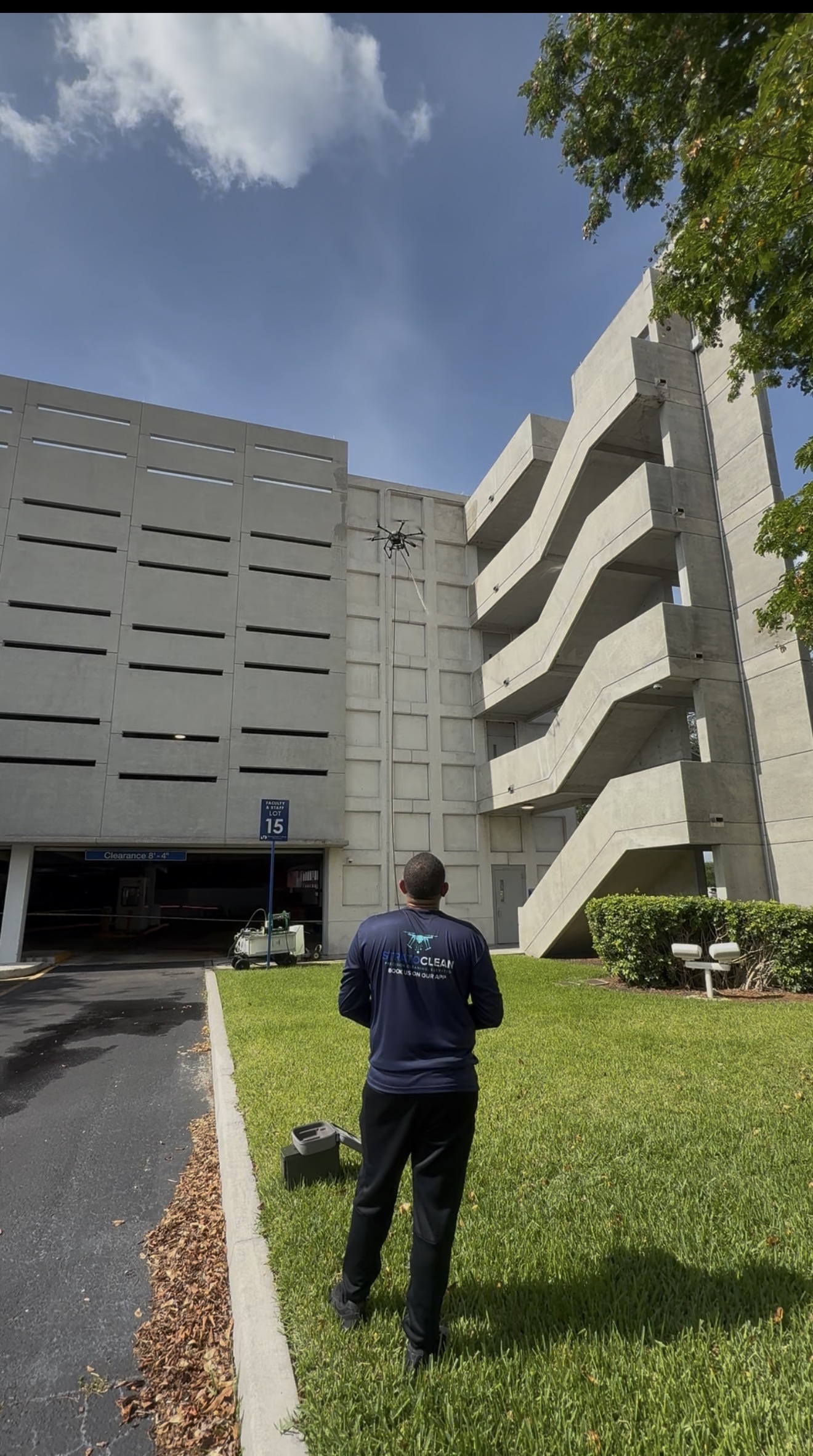
Recertification-age buildings are almost always occupied, and boards facing a filing window rarely have months to spare. Traditional facade access — scaffolding, swing stages, boom lifts — means permits, roof anchors, sidewalk sheds, and weeks of equipment hanging outside residents’ windows before the first surface gets washed. A drone crew mobilizes from the ground in hours. The aircraft applies a biodegradable soft-wash solution at low pressure across the full height of the building, lets it dwell, and rinses — no one suspended at height, no rigging bolted to a roof that is itself about to be inspected.
The safety case is chemistry-led. Soft washing cleans with a surface-matched, biodegradable detergent rather than force, which matters on exactly the substrates recertification-age buildings have: aging stucco, painted concrete, original window seals. High pressure can drive water into cracked stucco and open joints; a low-pressure wash cleans the surface without stressing it. Flights are planned by FAA-authorized pilots around the building’s geometry, weather, and airspace.
Wash-water and traffic planning on urban Miami sites
Washing a building in an urban core is not just a cleaning problem — it is a wash-water problem and often a sidewalk problem. Job planning at StratoClean is led by an FDEP-trained Qualified Stormwater Management Inspector, which means every project starts with a plan for where rinse water goes: identifying storm inlets near the work zone, sequencing elevations so wash water is managed responsibly, and documenting the approach so your association can show the job was planned with stormwater rules in mind. That documentation belongs in the same file as your recertification paperwork.
When a building fronts a public sidewalk or a travel lane — common on Brickell, downtown Miami, and the beach corridors — the work zone below the flight path has to be controlled. Our team holds FDOT Temporary Traffic Control Advanced certification, so we plan and set our own maintenance-of-traffic: cones, signage, and pedestrian routing, coordinated with the municipality when permits are required. You are not hiring a second contractor to close the sidewalk so the first one can work.
What we hand your board and your engineer
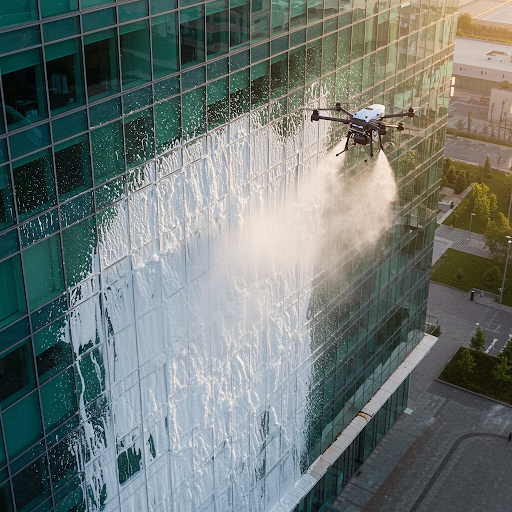
Every recertification-prep cleaning closes with a documentation package: dated before-and-after imagery of each elevation, close-range photos of any anomalies our pilots observed during the wash — cracking, rust staining, spalling, sealant failure — and a summary your property manager can forward to the inspecting engineer. We are cleaners, not engineers, and we do not diagnose structural conditions; we flag what the camera sees so the licensed professional can evaluate it. Boards tell us this package alone changes the tone of the inspection: the engineer arrives at a clean, photographed, actively maintained building.
Frequently Asked Questions
Should I clean my building before a 40-year recertification inspection?
Yes. The inspecting engineer evaluates what is visible, and years of algae, salt film, and pollution staining can hide hairline cracks, rust bleed, and spalling. A documented cleaning beforehand gives the engineer a readable surface, produces better report photographs, and often reveals conditions early enough to address them before the inspection.
What is the 40-year recertification in Miami-Dade and Broward?
It is a program requiring buildings of a threshold age to be inspected by a licensed engineer or architect, who certifies structural and electrical safety for continued occupancy in reports filed with the building department. The county programs have been folded into Florida’s statewide milestone inspection framework, so confirm current trigger ages and deadlines with your municipality.
Does exterior cleaning count as part of the recertification?
No — cleaning is preparation, not certification. Only a licensed engineer or architect can perform the inspection and file the reports. Cleaning supports the process by exposing the true condition of the envelope, and the dated imagery from the wash becomes useful supporting documentation in the association’s maintenance records.
Can a drone clean an occupied condo or office building?
Yes — this is where drone cleaning is strongest. There is no scaffolding outside windows, no swing stage on the roof, and no weeks of rigging. The crew works from the ground, mobilizes in hours, and the low-pressure biodegradable soft wash is applied and rinsed with minimal disruption to residents and tenants.
What happens to the wash water on a city building?
It gets planned before the first drop is sprayed. StratoClean job planning is led by an FDEP-trained Qualified Stormwater Management Inspector, so each project includes a wash-water management approach — locating storm inlets, sequencing the work, and documenting the plan — using biodegradable cleaning solutions throughout.
What if the building fronts a sidewalk or street?
We handle the traffic control ourselves. Our team holds FDOT Temporary Traffic Control Advanced certification, so we plan and set our own cones, signage, and pedestrian routing when a sidewalk or lane sits under the work zone, coordinating with the municipality where permits are required.
Will soft washing reveal cracks or damage in my facade?
Frequently, yes. Removing biological staining exposes the substrate underneath, and our close-range flight imagery often surfaces crack patterns, efflorescence, or spalled edges that were invisible under the grime. We photograph and flag anything we see so your engineer can evaluate it — early discovery is one of the strongest reasons to clean before inspecting.
Related Services & Areas
- drone building and facade cleaning
- high-rise and condo exterior programs
- milestone inspection exterior cleaning in Florida
- concrete and wall cleaning
- drone cleaning services in Miami
- how drone building cleaning works
Get a Straight Answer for Your Building
Tell us what you’re maintaining and we’ll tell you exactly how we’d clean it — method, timeline, and a firm number. Call (786) 244-0640, email info@stratoclean.com, or get an instant roof quote online.