The only drone cleaning system in Florida that reaches the spots others skip.
Conventional drone cleaners reposition the entire aircraft to aim a fixed nozzle. Our patent-pending steerable nozzle directs the cleaning stream into eaves, balcony undersides, window frames, and recessed corners other operators physically can’t reach. Full cleaning, every time. No “we can’t get to that spot.” Because the drone holds steady at safe standoff distance — no maneuvering near complex infrastructure — every job is safer for our team and your property.
Solar Farm Cleaning Services in Florida
STRATOCLEAN provides professional drone-powered cleaning services for utility-scale solar farms across Florida. With over 60 FPL solar energy centers and dozens of Duke Energy, Tampa Electric, and independent solar installations statewide, Florida’s solar infrastructure needs regular maintenance to perform at peak efficiency.
Why Solar Farms Need Professional Cleaning
Florida’s climate is brutal on solar panels. Pollen, dust, bird droppings, humidity, salt air along coastal installations, and organic growth accumulate on panel surfaces — reducing energy output by 15–25% annually. For a 74.5 MW solar energy center with 300,000 panels, that efficiency loss translates to millions of dollars in unrealized energy production every year.
STRATOCLEAN’s drone fleet cleans utility-scale solar installations faster, safer, and more cost-effectively than any ground-based crew:
- 10x faster — clean hundreds of acres in days, not weeks
- Zero panel contact — no foot traffic, no micro-cracking, no mounting damage
- efficiency measured and documented
- Biodegradable solutions — safe for surrounding farmland, waterways, and wildlife
- Full compliance documentation — before/after photos, coverage reports, maintenance records
Florida Solar Farms We’re Built to Service
We’re built to service projects for utility-scale solar operators like FPL/NextEra Energy, Duke Energy Florida, Tampa Electric, OUC, JEA, and independent producers — with the drones, chemistry, crews, and compliance documentation to deploy at installations across every Florida county with utility-scale solar, including representative sites such as:
- Miami-Dade County: FPL Miami-Dade, Everglades, and Redlands Solar Energy Centers
- Palm Beach County: FPL Sabal Palm and Silver Palm Solar Energy Centers
- Brevard County: FPL Barefoot Bay, Discovery, and Palm Bay Solar Centers
- St. Lucie County: FPL Loggerhead, Interstate, Bluefield Preserve, Pink Trail, Pelican
- Okeechobee County: FPL Fort Drum, Lakeside, and Cavendish Solar Centers
- Hillsborough & Polk Counties: Tampa Electric Balm, Bullfrog Creek, Lithia, Magnolia, Lake Mabel, Jamison
- DeSoto & Charlotte Counties: FPL Citrus, Wildflower, Rodeo, Babcock Ranch Solar Centers
- Panhandle: FPL Blackwater River, Apalachee, Chipola River, Chautauqua, First City
How Our Solar Farm Cleaning Process Works
- Site Assessment: We survey the installation with aerial mapping drones to identify contamination levels and plan the cleaning route
- Drone Deployment: Our FAA-certified pilots deploy cleaning drones equipped with soft wash spray systems across the panel arrays
- Biodegradable Treatment: Panels are treated with our proprietary cleaning solution that dissolves organic buildup without harming panels, coatings, or the environment
- Rinse & Verify: Panels are rinsed and spot-checked for coverage. We guarantee 90%+ surface coverage on every job
- Documentation: Full before/after photo documentation, coverage report, and efficiency improvement data delivered to your operations team
Pricing & Annual Maintenance Programs
We offer per-cleaning pricing and annual maintenance contracts for solar farm operators. Annual programs include quarterly or bi-annual cleaning visits with priority scheduling and volume discounts. Contact us for a custom quote based on your installation size and location.
Get a Free Solar Farm Cleaning Assessment
📞 Call: (786) 244-0640
📧 Email: info@stratoclean.com
🌐 Web: stratoclean.com
STRATOCLEAN — Dedicated to Safety, MOT Certified. Professional drone cleaning for utility-scale solar farms across Florida. efficiency measured and documented.
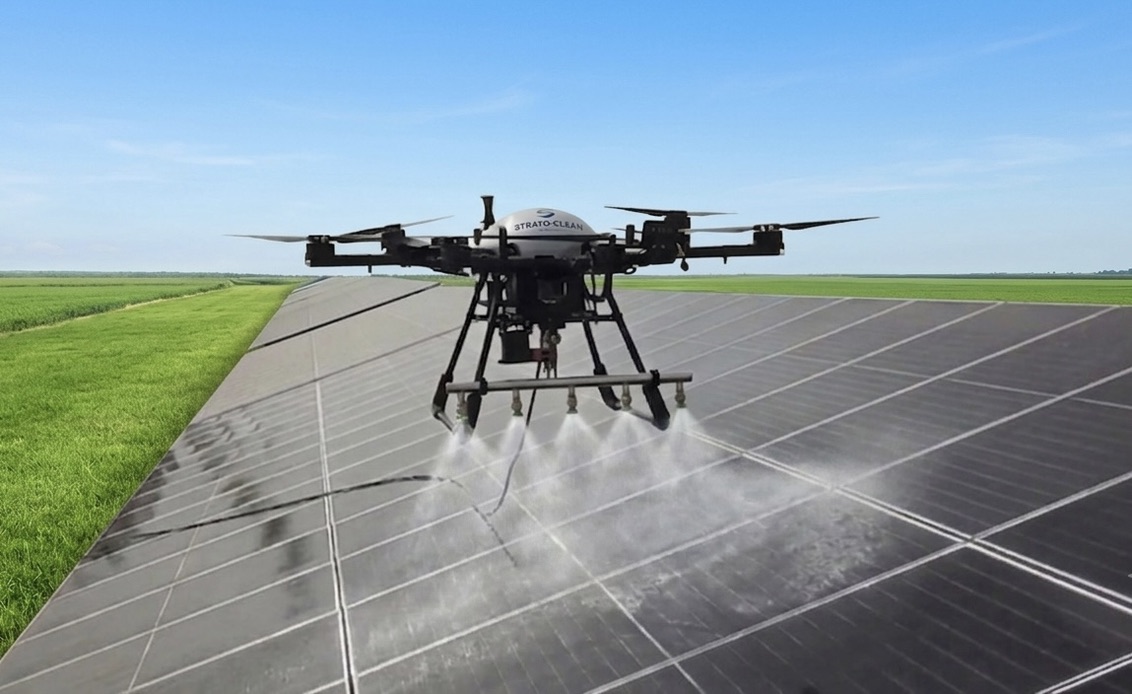
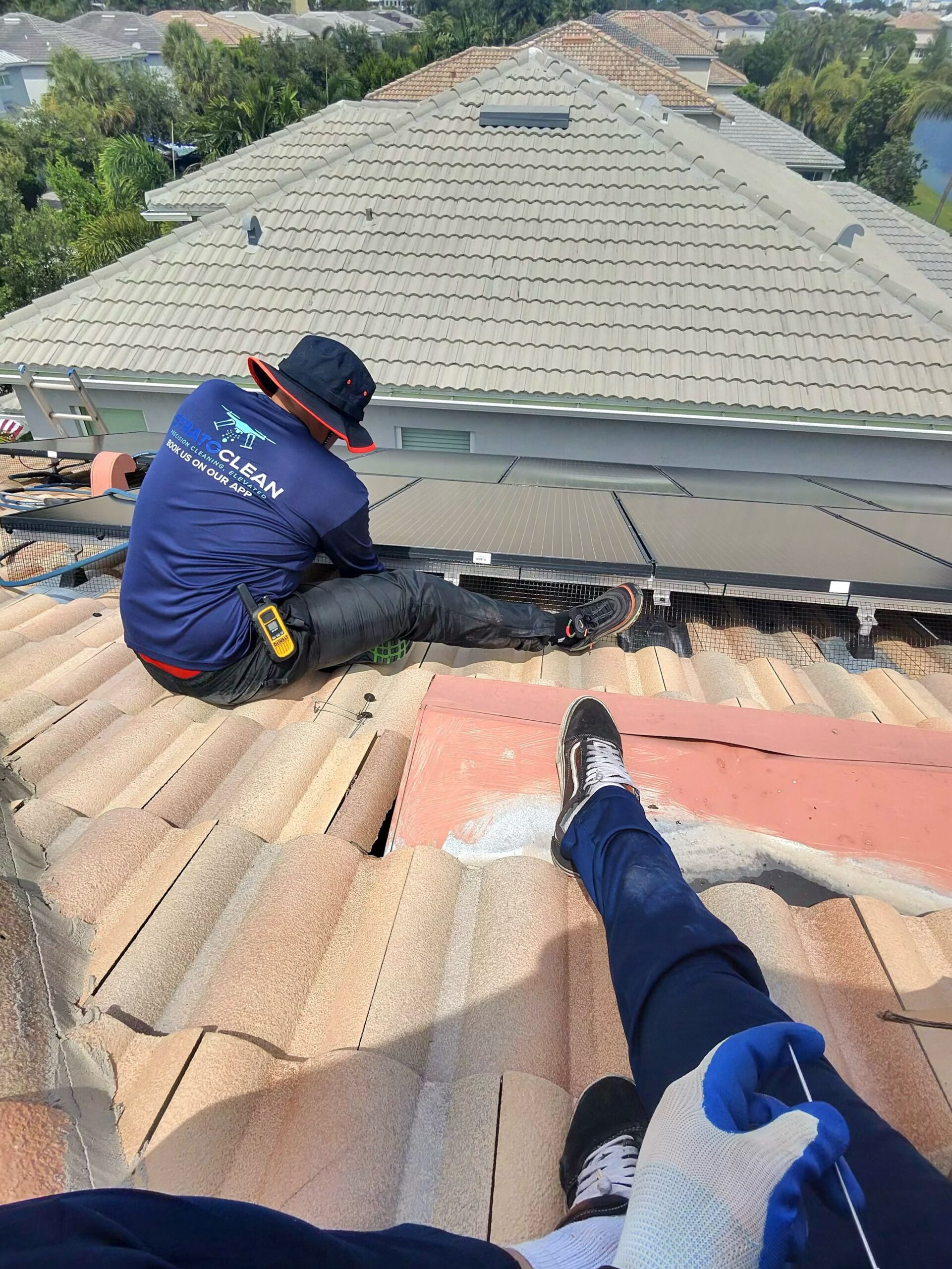
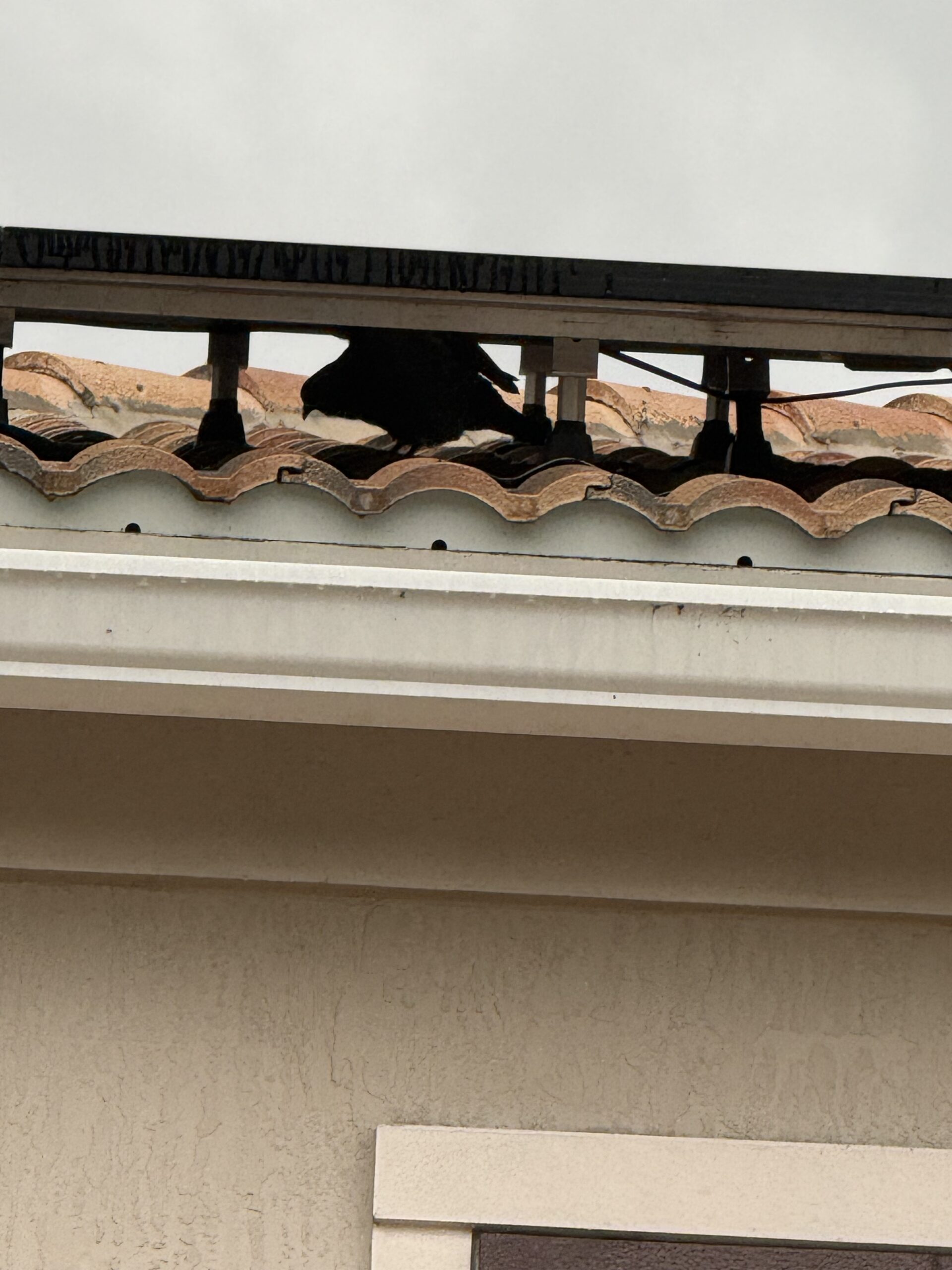
Real drone solar cleaning work — Florida arrays
What soiling actually costs a solar farm
Sources: NREL · MIT News · pv-magazine
Drone soft-wash vs. robotic vs. manual cleaning
| Drone soft-wash (StratoClean) | Fixed robotic system | Manual / brush crews | |
|---|---|---|---|
| Up-front hardware | None — nothing installed on your array | High capex, permanently mounted per row | None |
| Array geometry | Any layout, tilt, tracker, or terrain | Only rows fitted for the robot | Any, but slow |
| Speed on large sites | Covers large arrays per day from the air | Row-by-row, fixed path | Slowest; crew walks every row |
| Panel safety | Low pressure + purified water, no abrasion | Brush contact each cycle | Brush/abrasion risk to coating |
| Crew on live panels | No — operated from the ground | No | Yes — crews on high-voltage arrays |
| Best for | Utility & commercial farms wanting flexible, on-demand cleaning | Single fixed site with daily dust | Small arrays |
Abrasive brushes and high pressure can scratch the anti-reflective glass coating and may void panel warranties — our low-pressure, purified-water soft wash is coating-safe.
Frequently Asked Questions
How much energy do dirty solar panels lose?
Soiling — dust, pollen, bird droppings, and salt film — typically costs a solar array about 5% of its annual output, and NREL data shows losses ranging from 3% to as much as 25% in dry, dusty, or high-traffic regions. MIT researchers found that in dirty environments dust can cut output by as much as 30% in a single month, and when Google cleaned its own solar farm, output roughly doubled overnight. On a utility-scale farm those percentages are real revenue, which is why scheduled cleaning pays for itself.
How often should a solar farm or commercial array be cleaned?
Most commercial and utility-scale arrays should be professionally cleaned at least twice a year, and every three to four months in high-dust, agricultural, coastal, or heavy-pollen environments like Florida. The right interval depends on your soiling rate, tilt, and rainfall; StratoClean sets a data-based schedule from a soiling assessment rather than a generic calendar.
How do you clean solar panels on a solar farm?
On a commercial or utility-scale array, panels are cleaned with water and a soft, non-abrasive method — never a pressure washer, which can crack cells and scratch the anti-reflective coating. StratoClean cleans solar farms with a drone-applied soft wash: a low-pressure spray of purified (deionized) water, with a panel-safe solution when needed, applied across the array from the air and rinsed so the glass dries spot-free. Because the drone does the reaching, there are no crews walking live high-voltage rows, no brushes dragged across the glass, and a large array is covered far faster than hand cleaning.
Does rain clean solar panels well enough?
No. Rain rinses loose dust but leaves behind a bonded film, streaks, and the mineral spotting that forms as droplets dry, and it does nothing for bird droppings or pollen crust. Panels in rainy climates still measurably underperform clean ones, so rain is not a substitute for periodic professional cleaning.
Will cleaning void my solar panel warranty?
It can — if it is done with abrasive brushes or high pressure. Scrubbing and pressure washing can scratch the anti-reflective glass coating, and several manufacturers void their warranty for improper cleaning. StratoClean uses a low-pressure soft wash with purified water and a panel-safe solution, so there is no abrasion and nothing that compromises the coating or the warranty.
Can you pressure wash solar panels?
No — you should never pressure wash solar panels. High-pressure water can crack the cells, force moisture past the seals, and scratch or strip the anti-reflective glass coating, and it is one of the fastest ways to void a panel warranty. Panels are cleaned with a low-pressure, non-abrasive method instead. StratoClean uses a drone-applied soft wash with purified (deionized) water, which has the minerals stripped out so the glass lifts soiling and dries spot-free — no hard-water etching, no residue, and no pressure-driven damage to the coating.
Is drone cleaning better than robotic or manual cleaning for a solar farm?
For most commercial and utility-scale sites, yes. A drone soft wash installs no permanent hardware, adapts to any array layout, tilt, tracker, or terrain, and covers large arrays quickly from the air — without crews walking live high-voltage rows or abrasive brushes touching the glass. Fixed robotic systems make sense for a single site with daily dust and the capex to mount them per row; manual crews are the slowest and carry the most abrasion and safety risk.
Do you have to shut the solar farm down to clean it?
No. The array stays energized and producing while we clean. Because the drone works from the air and our crew stays on the ground, there is no need to walk the rows or contact live high-voltage equipment, so cleaning happens without a shutdown.
Can dirty panels cause permanent damage, not just lost output?
Yes. Localized soiling like a bird dropping or a leaf shades individual cells, which forces them to work as resistors and create hot spots — concentrated heat that can permanently damage cells and shorten panel life over time. Regular cleaning removes those localized deposits before they cause hot-spot damage.
How much does solar farm cleaning cost?
Cost depends on the number and layout of panels, the site’s soiling level, water access, and terrain. Because StratoClean’s drone reaches the full array from the ground, there is no lift, scaffolding, or large ground crew to pay for, so it is typically more cost-effective than hand cleaning — and it recovers lost generation that helps pay back the service. We provide a free, no-obligation soiling assessment and written scope, including recurring-contract pricing. Request an assessment at stratoclean.com/quote or call (786) 244-0640.
Who cleans solar farms in Florida?
StratoClean provides solar farm panel maintenance and cleaning across Florida using a drone-applied purified-water soft wash. Florida’s heat, humidity, pollen, and coastal salt make soiling especially costly here, and utility-scale cleaning is best handled by drone soft-wash specialists rather than general pressure washers — reaching a large array safely and cleaning the glass without abrasion takes the right method and water. Request service at stratoclean.com/quote or call (786) 244-0640.
Get a price on your array
Soiling costs a utility-scale array real production every dry month, and more where there is agricultural dust or bird pressure. We clean from the air, so nothing touches the modules, nothing drives between the rows, and we finish with deionized water so the panels dry without spotting.
Security review first? The aircraft carries no GPS fix, no Wi-Fi or cellular, and no onboard storage, and its camera does not record. We do not map your site, and every flight is hand-flown from start to finish. How we answer grid-security requirements →
Tell us what you pay now and we will guarantee to cut it by at least half, in writing.