The only drone cleaning system in Florida that reaches the spots others skip.
Conventional drone cleaners reposition the entire aircraft to aim a fixed nozzle. Our patent-pending steerable nozzle directs the cleaning stream into eaves, balcony undersides, window frames, and recessed corners other operators physically can’t reach. Full cleaning, every time. No “we can’t get to that spot.” Because the drone holds steady at safe standoff distance — no maneuvering near complex infrastructure — every job is safer for our team and your property.
Wind Turbine Cleaning Services
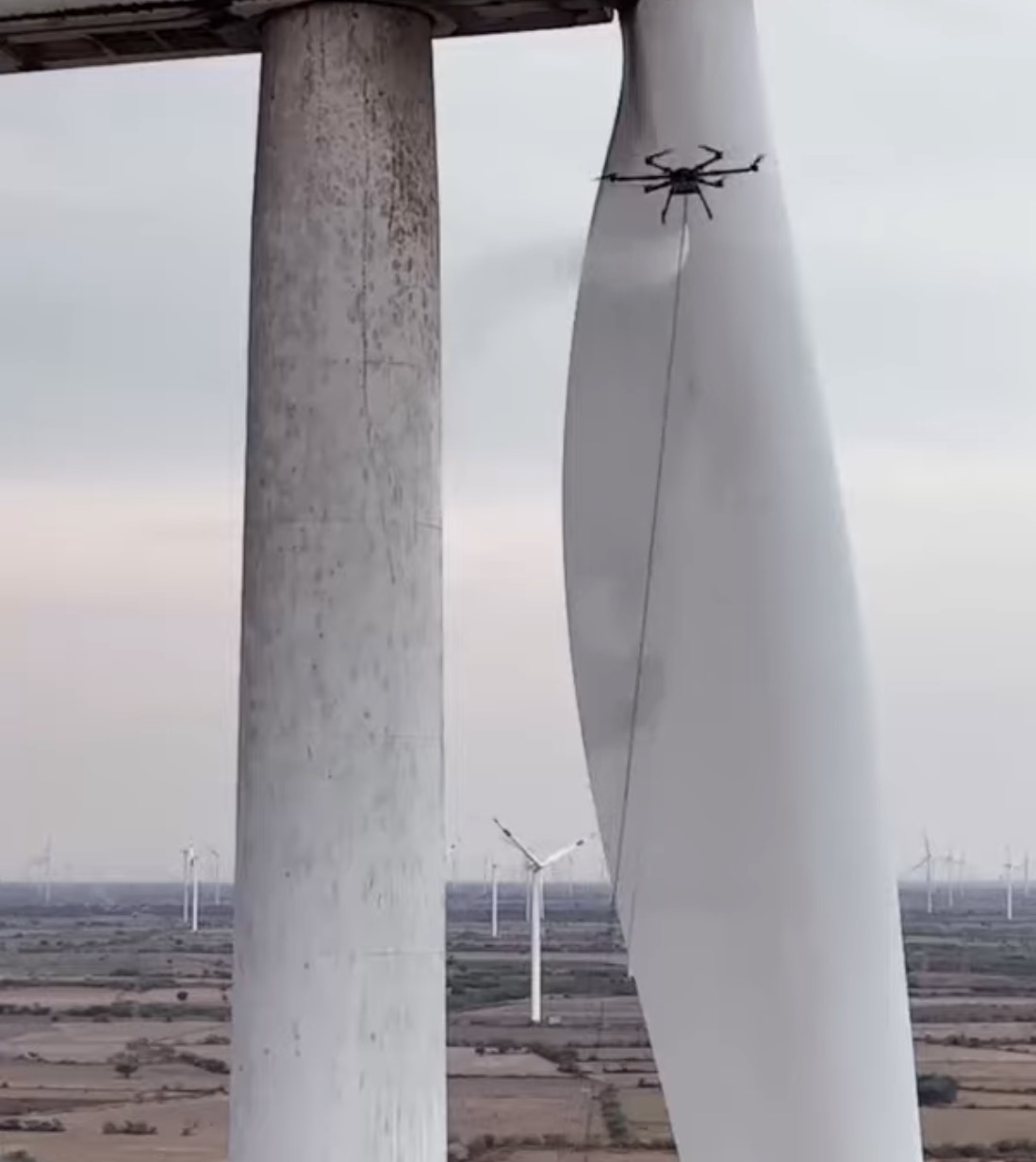
STRATOCLEAN provides professional drone-powered cleaning and inspection services for wind turbines and wind farm infrastructure. Our FAA-certified drone pilots clean turbine blades, towers, and nacelles without rope access crews, crane lifts, or turbine shutdowns — saving you time, money, and downtime.
Why Wind Turbines Need Regular Cleaning
Wind turbine blades accumulate insects, dirt, salt deposits, and environmental contaminants that create surface roughness and reduce aerodynamic efficiency. Studies show that contaminated blade surfaces can reduce annual energy production by up to 50% in severe cases. Even moderate buildup reduces output by 5–10% — across a 200-turbine wind farm, that’s millions in lost revenue annually.
Traditional blade cleaning methods are expensive, dangerous, and slow:
- Rope access teams are costly, slow, and require specialized safety crews
- Crane-based cleaning requires full turbine shutdown and road closures
- Ground-based high-pressure systems can damage blade coatings
STRATOCLEAN’s drone cleaning eliminates all of that.
Our Wind Turbine Cleaning Services
- Blade Surface Cleaning: Removes insect accumulation, dirt, dust, salt deposits, and organic growth from blade leading and trailing edges
- Tower Exterior Cleaning: Removes environmental staining and prevents corrosion on steel and concrete towers
- Nacelle & Hub Cleaning: Exterior cleaning of nacelle housings and hub assemblies
- Pre-Inspection Cleaning: Clean blade surfaces before scheduled condition assessments for accurate defect detection
- Post-Repair Cleaning: Remove adhesive residue, dust, and debris after blade repair operations
Why Choose Drone-Based Wind Turbine Cleaning
- No turbine shutdown required for exterior cleaning — blades are locked but no internal access needed
- 10x faster than rope access or crane-based methods
- Fraction of the cost — no specialized rigging, no road closures, no crane rental
- Zero worker-at-height risk — Dedicated to Safety, MOT Certified, zero-accident record
- Biodegradable cleaning solutions — safe for agricultural land surrounding wind farms
- Detailed documentation — HD photo/video of every blade surface, pre and post cleaning
Wind Energy Installations We’re Built to Service
STRATOCLEAN is built to deploy nationwide for wind farm cleaning contracts. Our drone-based system is engineered to service the kind of installations found across major US wind corridors:
- Texas Panhandle & West Texas — large-scale arrays with 180+ wind farms statewide
- Oklahoma wind corridor — multi-turbine ridge and plains installations
- Kansas wind belt — high-density arrays across central wind corridors
- Iowa & Midwest portfolio sites — statewide multi-operator installations
- Southeast US & Gulf Coast — emerging wind projects in Florida and adjacent states
Annual Maintenance Contracts
We offer annual and multi-year wind turbine cleaning contracts with scheduled quarterly or semi-annual visits. Volume pricing available for wind farms with 50+ turbines. Contact us for a custom proposal tailored to your wind farm’s size, location, and maintenance schedule.
Get a Free Wind Farm Cleaning Assessment
📞 Call: (786) 244-0640
📧 Email: info@stratoclean.com
🌐 Web: stratoclean.com
STRATOCLEAN — Dedicated to Safety, MOT Certified. Professional drone cleaning for wind turbines and wind farm infrastructure. Serving wind energy operators nationwide.
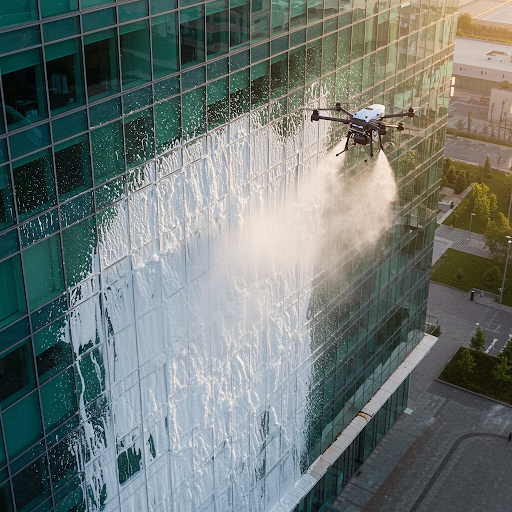
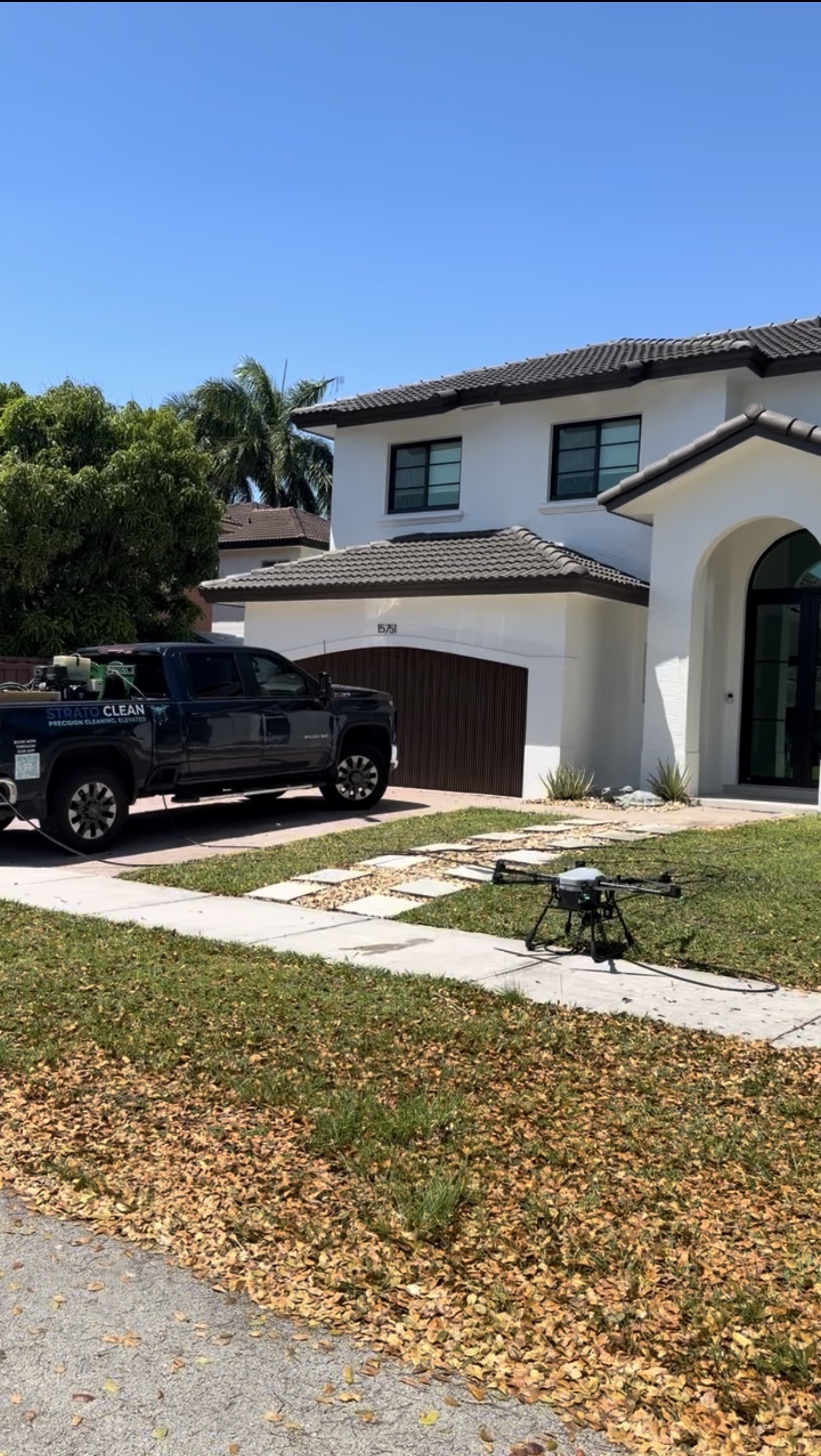
Real drone vertical-surface cleaning — height capability evidence
What soiling actually costs a wind turbine
Sources: Nature (Corten & Veldkamp, 2001) · HOLT Aerial
Drone soft-wash vs. blade-crawler robots vs. rope-access crews
| Drone soft-wash (StratoClean) | Blade-crawler robot | Rope-access / rappel crews | |
|---|---|---|---|
| People at height | None — flown from the ground | None, but rigged to the blade | Yes — technicians rappel the blade |
| Setup | Land, launch, fly — minutes | Mount crawler and rigging per turbine | Rope rigging + two-person teams + rescue standby |
| Reaches | Full blade height and the tower | Blade surface | Blade and tower, slowly |
| Downtime | Minimal; fast redeploy between turbines | Moderate | High — slow, weather-limited |
| Coating safety | Low-pressure soft wash, gelcoat-safe | Contact scrubbing | Manual; variable |
| Safety profile | No fall exposure | Low | Highest-risk method in wind O&M |
Cleaning restores recoverable soiling losses. It is not the same as repairing leading-edge erosion, which is permanent surface damage that needs a coating repair — we tell you which one you are looking at.
Frequently Asked Questions
Do wind turbines need to be cleaned?
Yes. Blades and towers accumulate dead insects, dirt, salt, algae, and oil streaking, and that roughness disrupts the airflow the blade depends on. A landmark study in Nature found insect buildup alone can cut turbine output by up to 25% under high winds — a loss that is largely recoverable simply by cleaning the blades. Clean blades restore the aerodynamic surface and the energy production that soiling quietly bleeds away.
Why do wind turbine blades get dirty?
Blades and towers pick up contamination from several sources. In low-wind periods insects collect on the leading edge; coastal and offshore sites add salt and sea-spray film; airborne dust, pollen, and algae build up over time; and the turbine itself contributes — as the gearbox and hydraulic seals age they begin to seep and weep oil, the main and pitch bearings sling grease under high winds, and the nacelle vents an oily mist that the wind carries down the blades and tower as dark streaks. Each of these adds surface roughness that disrupts the blade’s airflow, so it is more than cosmetic.
How much energy do soiled or dirty blades lose?
Insect and dirt contamination on the leading edge can reduce production by up to 25%, and under certain wind conditions a heavily soiled blade can shed close to half its power through an aerodynamic effect called double stall. The roughness trips the airflow from smooth to turbulent early along the blade, cutting lift and adding drag. Because this loss is soiling rather than damage, cleaning recovers most of it.
What is leading edge erosion on wind turbine blades?
Leading-edge erosion is the gradual pitting of the blade’s leading edge caused by rain, hail, dust, and airborne particles striking it as it rotates — and it is different from soiling. It develops over years and can cost roughly 5% of annual energy production on a utility-scale turbine on its own. This is the key distinction most providers skip: cleaning removes soiling (insects, dirt, salt, algae, and oil streaks) and restores those recoverable losses, but erosion is permanent surface damage that needs a coating repair, not a wash. StratoClean’s drone inspection tells you which one you are looking at, so you do not pay to repair what only needed cleaning.
How are wind turbine blades cleaned?
Traditionally, blades are cleaned by rope-access technicians who rappel each blade, by boom trucks and sponge rigs, or by up-tower water-spray systems — all slow, weather-limited, and, in the case of rope crews, the highest-risk work in wind O&M. StratoClean instead uses a ground-operated drone that applies a low-pressure soft wash across the blade and tower, removing insects, dirt, salt, algae, and oil streaking without abrasion and without putting anyone at height.
How do drones clean wind turbine blades?
A ground-operated drone flies a low-pressure soft-wash solution across the blade and tower, lifting insects, dirt, salt, and oil streaking without abrasion, then a controlled rinse. The drone reaches the full height of the blade and the tower from the ground, so there are no rope crews on the blade, no scaffolding, and no boom lift. It is fast to set up and redeploy from one turbine to the next.
Can you remove gearbox oil and grease streaks from the blades and tower?
Yes — this is one of the most common things we clean. As a turbine’s gearbox and hydraulic system age, the seals seep and weep oil and the main and pitch bearings sling grease in high winds, so the nacelle vents an oily mist that streaks down the blades and tower and leaves the dark oil staining O&M crews know well. StratoClean’s soft wash removes that oil and grease film from the exterior of the blades, nacelle housing, and tower, clearing the streaks that hold dust against the surface and mask the blade during inspection. We clean the external staining; sealing the leak itself is a mechanical repair for your O&M team.
Why choose drone cleaning over rope-access or rappel crews?
Rope access is the highest-risk method in wind O&M — technicians rappel the blade in two-person teams with a rescue standby, exposed to falls, arc-flash, and strain injuries. A drone removes people from height entirely: it is flown from the ground, sets up in minutes instead of hours of rigging, is less weather-limited, and cleans the blade and tower faster, which means less downtime per turbine.
What’s the difference between drone soft-wash and robotic (blade-crawler) cleaning?
A blade-crawler robot rigs onto the blade and scrubs by contact, which still requires mounting hardware on each turbine and moves at the pace of the crawler. StratoClean’s free-flying drone applies a low-pressure soft wash from the air, with nothing mounted on the turbine, reaching both the blade and the tower and redeploying quickly between units. Low pressure keeps the wash gelcoat-safe versus contact scrubbing.
Does low-pressure soft washing damage the blade coating or gelcoat?
No. Soft washing cleans chemically at low pressure rather than blasting or scrubbing, so it lifts soiling without abrading the gelcoat or the blade’s protective coating. High-pressure washing and contact brushes are what risk the surface; a low-pressure soft wash is the blade-safe method.
How often should wind turbine blades be cleaned?
General guidance is every five to seven years, but turbines in coastal, high-humidity, or high-insect environments benefit from more frequent cleaning because insect and salt buildup accumulates faster. The right interval is driven by how quickly production drops against expected output; a drop that tracks soiling rather than mechanical issues is the signal to clean.
Can you clean the tower and nacelle too, not just the blades?
Yes. The same ground-operated drone soft wash reaches the full tower height for salt, grime, algae, and the gearbox-oil and grease streaking that runs down from the nacelle, not only the blades. Keeping the tower and nacelle housing clean protects the coating and keeps the installation presentable, which matters for turbines near communities and public roads.
How much does wind turbine cleaning cost, and what’s the ROI?
Cost depends on turbine height, blade condition, the number of units, and site access, but the economics are driven by what soiling costs in lost generation and by the cost of every day a turbine spends offline. Because a drone cleans from the ground with no rope teams or lifts and redeploys quickly between units, it minimizes both the cleaning cost and the downtime, so recovering even a fraction of soiling-related losses pays for the service. StratoClean provides a free assessment and written scope; request one at stratoclean.com/quote or call (786) 244-0640.
Get a price on your turbines
Blade soiling and gearbox or hydraulic oil streaks cost you production and draw complaints from the county. We clean from the air, so there is no rope team on the blades and no platform to erect — the only turbine time we need is your technician indexing the rotor between blades.
Security review first? The aircraft carries no GPS fix, no Wi-Fi or cellular, and no onboard storage, and its camera does not record. We do not map your site, and every flight is hand-flown from start to finish. How we answer grid-security requirements →
Tell us what you pay now and we will guarantee to cut it by at least half, in writing.