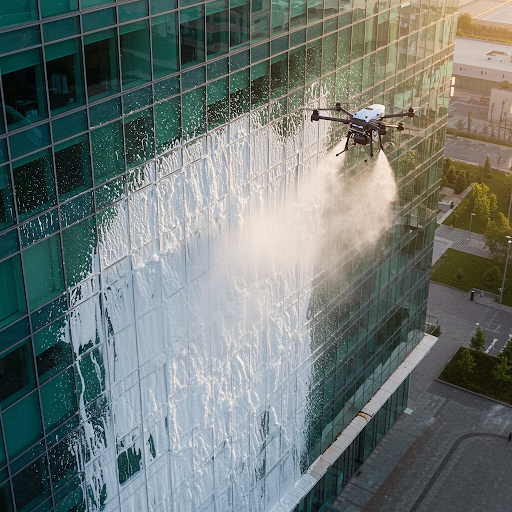
Drone building cleaning washes your entire facade — glass, stucco, concrete, metal panel, and stone — from the air. No scaffolding, no swing stages, no lifts on the plaza. StratoClean’s aerial soft wash cleans full building heights in a single mobilization, from mid-rise offices to towers.
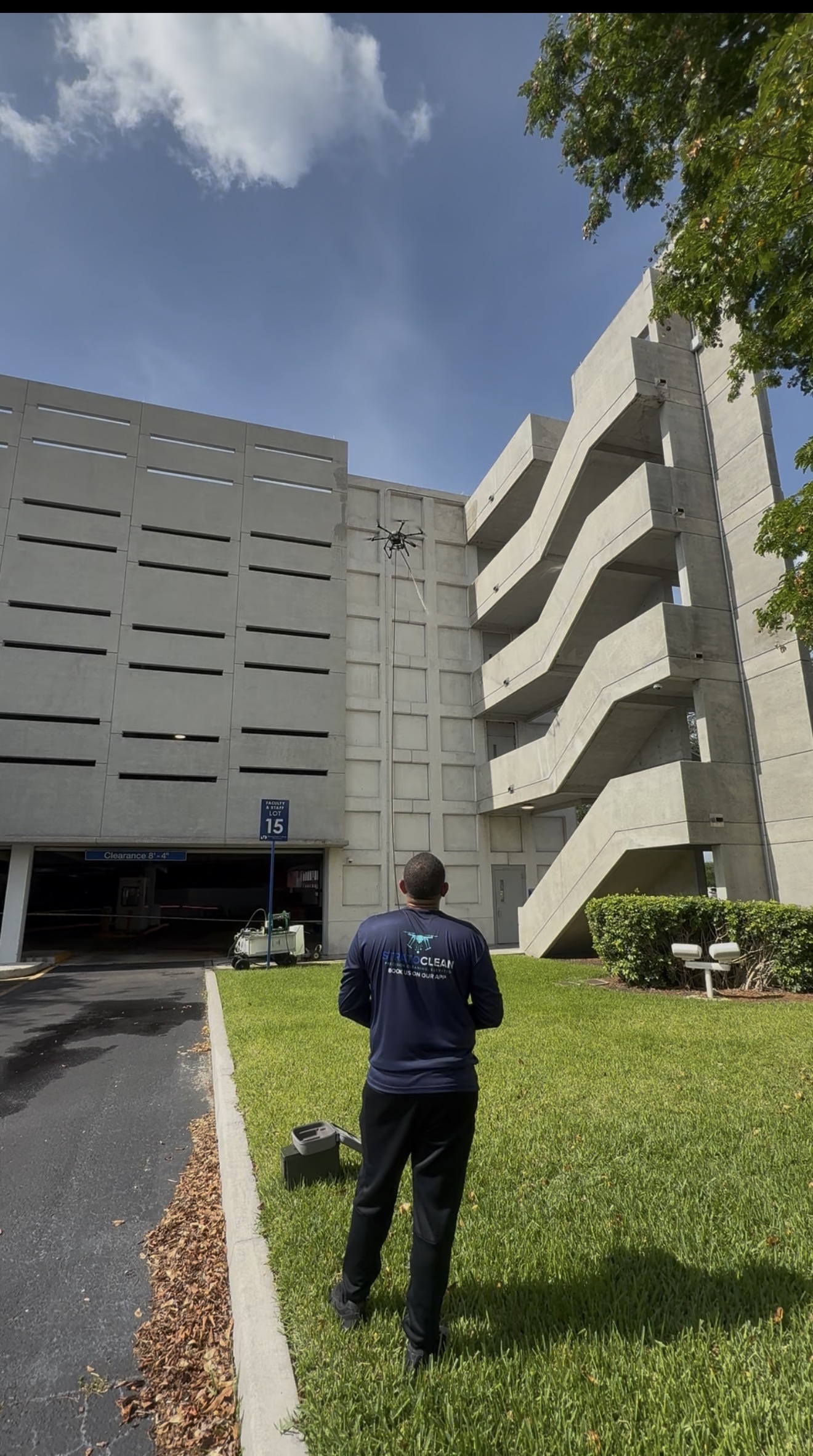
Drone building washing, explained
An industrial spray drone applies a biodegradable, surface-matched detergent at low pressure across the facade, lets it dwell, and rinses. The result is an even, streak-free clean across the full height of the building — including setbacks, overhangs, and architectural details that are slow and dangerous to reach by rope. Your tenants see a clean building, not weeks of dangling equipment.
Buildings we clean
High-rise condominiums and offices · hotels and resorts · hospitals and medical campuses · parking structures · stadiums and arenas · university and school campuses · government buildings · industrial plants and warehouses.
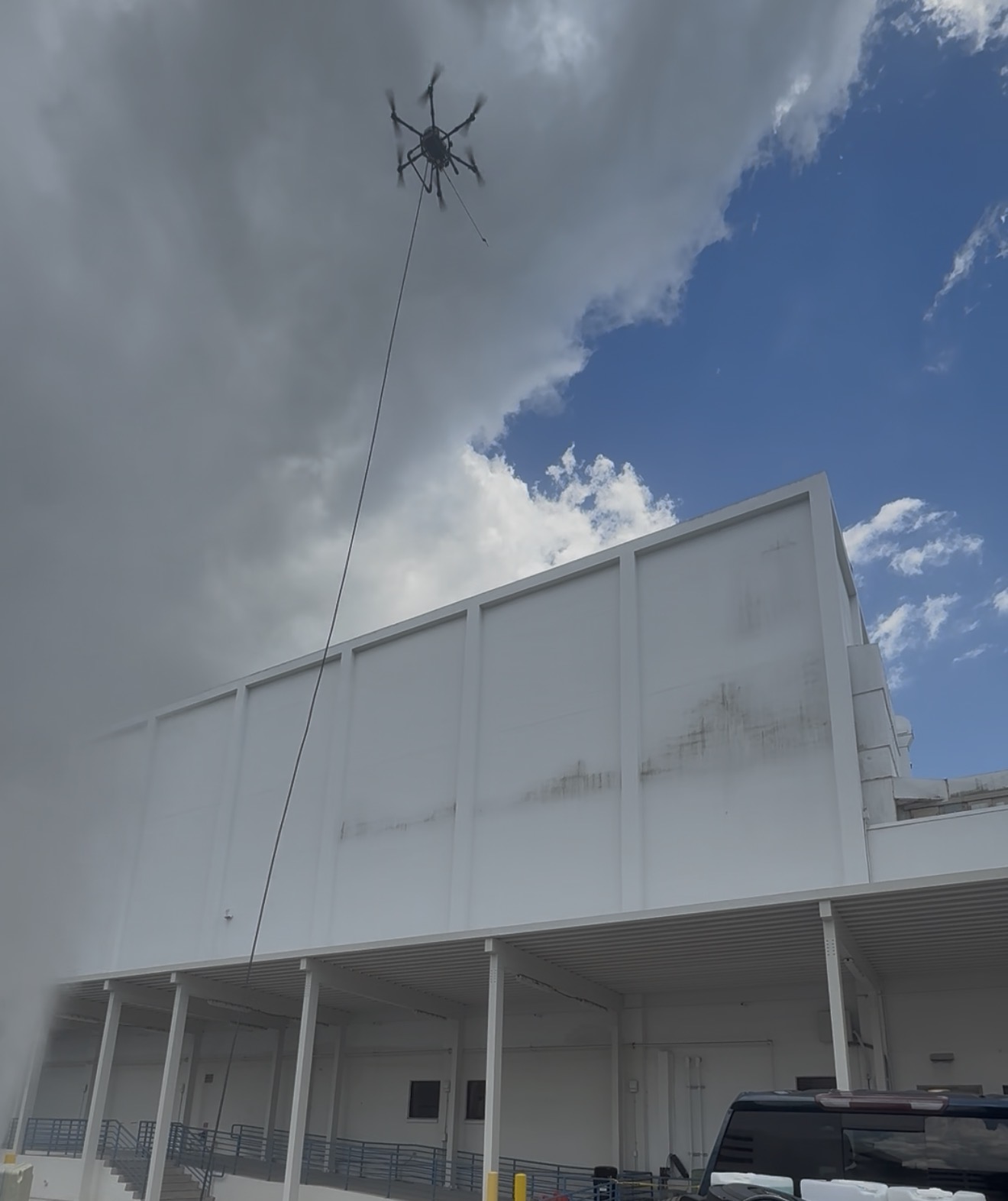
What it replaces
Scaffolding: weeks of build-out, permits, and sidewalk sheds. Swing stages: roof anchors, certifications, and one drop at a time. Rope access: skilled but slow, and a person at height on every drop. Boom lifts: lawn damage, plaza closures, and height limits. The drone does the same clean from the air — faster, and nobody leaves the ground.
Frequently Asked Questions
Can drones clean buildings?
Yes — specialized drones now clean building exteriors including facades, windows, cladding, and architectural features, with the operator controlling everything from the ground. The drone applies a low-pressure soft wash and purified-water rinse, eliminating the need for scaffolding, swing stages, or rope crews. Drone building cleaning has become an established commercial service for mid-rise and high-rise properties.
How much does it cost to clean a building exterior?
Building exterior cleaning is priced by square footage, height, surface material, and soiling level — and with drones, the cost is usually lower than traditional methods because expensive access equipment is removed from the equation. On traditional jobs, scaffolding or swing-stage rigging can be the single largest line item. Drone cleaning replaces that with a fast ground-based setup, which also means less disruption for tenants.
How often should a building facade be cleaned?
Most commercial facades should be cleaned every one to two years, with buildings in humid, coastal, or high-pollution environments needing annual cleaning. In South Florida, salt air, humidity, and biological growth accelerate soiling, so coastal properties typically sit at the more frequent end of that range. Regular cleaning also protects surfaces from long-term staining and degradation.
Is drone cleaning safe for building materials like stucco and glass?
Yes — drone soft washing is safe for delicate facade materials because it is touchless and low-pressure. Stucco in particular can be damaged by high-pressure washing or contact scrubbing; a low-pressure soft wash cleans it without driving water into the substrate. Surfaces are assessed before cleaning, and pressure and solution are matched to each material.
How do you clean a high-rise building exterior without scaffolding?
Drone cleaning is the leading way to clean high-rise exteriors without scaffolding: the drone applies solution and rinse water to the full facade while the crew stays on the ground. There is no rigging, no roof anchors, no street-level footprint from swing stages, and far less disruption to occupants. Setup takes hours instead of the days required to erect traditional access.
Does building washing remove mold and algae?
Yes — professional soft washing removes and kills mold, algae, and mildew rather than just rinsing surface dirt. The cleaning solution treats growth at the source, which is why soft-washed surfaces stay clean far longer than pressure-washed ones, where spores survive and regrow quickly. This matters especially in South Florida, where humidity makes biological growth the primary cause of facade staining.
What is the difference between drone washing and pressure washing?
The key differences are access and pressure: drone washing reaches any elevation from the ground and uses low-pressure soft-wash techniques, while traditional pressure washing relies on high PSI and requires workers to physically reach the surface. High pressure can damage stucco, shingles, painted surfaces, and glass seals; a soft wash cleans by chemistry instead of force. Drones also mobilize in hours rather than the days required for scaffolding or lift staging.
Related services
Drone window cleaning · Facade cleaning · Concrete & wall cleaning · Drone roof cleaning · All drone cleaning services
Get a fast, free assessment
Call (786) 244-0640, email info@stratoclean.com, or get an instant estimate with our online quote tool. Fully insured. Serving all of Florida.