Drone cleaning vs pressure washing: why soft-wash chemistry outperforms PSI on stucco, EIFS, and paint — and why algae returns fast after pressure alone.
Two different theories of clean
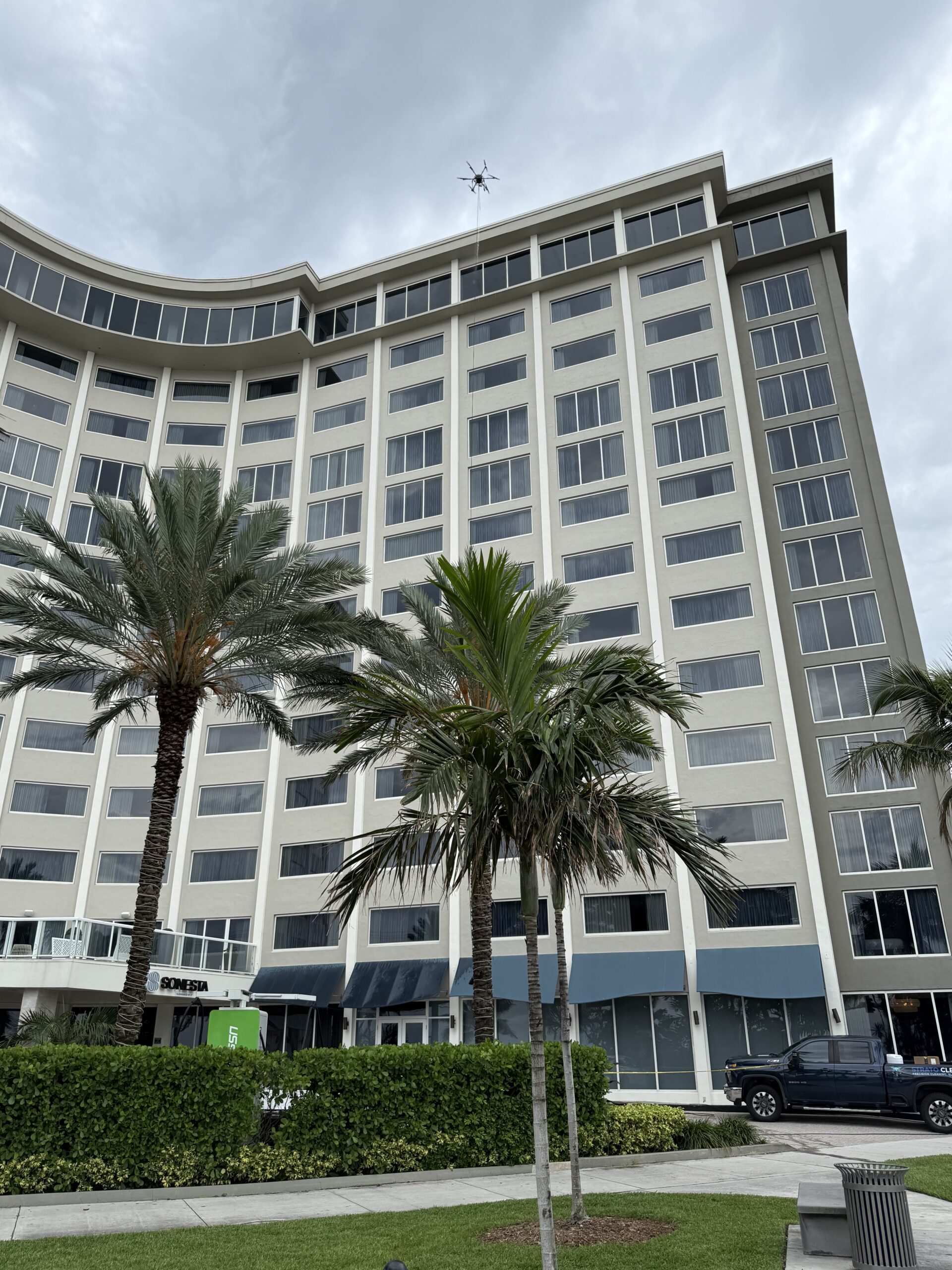
Pressure washing and soft washing are not two intensities of the same service — they are opposite theories of how a surface gets clean. Pressure washing is mechanical: blast the contamination off with water velocity, and whatever survives the blast stays. Soft washing is chemical: apply a biodegradable cleaning solution matched to the surface, let it dwell long enough to break down and kill the growth, then rinse at low pressure. The distinction matters because most of what stains a South Florida building is alive. Algae, mildew, lichen, and mold are organisms colonizing the surface, and the method that treats the organism — not just the visible stain — is the one that lasts. Drone cleaning is soft washing delivered by air, which means the chemical approach now works at any height a wand or lift could never sensibly reach.
What high PSI does to stucco, EIFS, screens, and paint
High-pressure water is a cutting tool, and building skins are softer than people assume. On stucco, concentrated PSI opens hairline cracks and drives water into the substrate, where trapped moisture feeds the next round of biological growth and, over time, delamination. EIFS is worse — it is a thin acrylic finish over foam, and a pressure wand can gouge it outright or force water behind the lamina where it has no drainage path. Window screens shred. Oxidized paint stripes and zebras under an inconsistent wand pattern, turning a cleaning into a repaint. Wood grain furs. Sealant joints erode. Much of this damage is invisible on the day of the wash and expensive a year later.
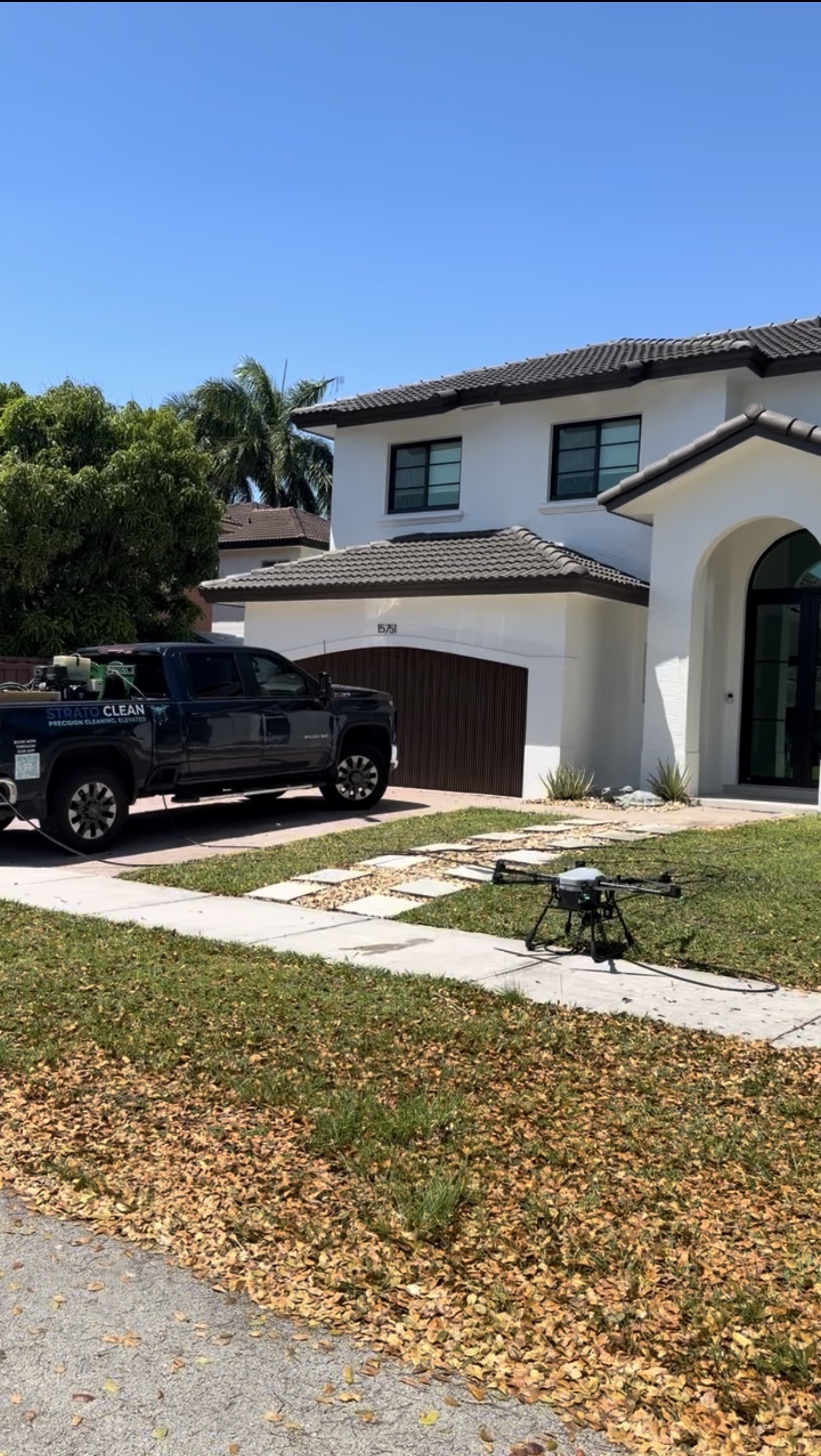
A soft wash never asks the surface to withstand force. The solution does the work during dwell, and the rinse arrives at pressures comparable to heavy rain. That is why soft washing is the manufacturer-recommended method for painted stucco, EIFS, and coated surfaces — and why our drone applies it identically on the second floor and the twentieth.
Why algae comes back fast after pressure-only cleaning
Every property manager has seen it: the building is pressure washed, looks great for a season, and the black and green streaking is back within months. The reason is biological. Pressure removes the visible colony but leaves spores and root structures alive in the surface pores — and it leaves them on a freshly stripped surface with no chemical resistance at all. In South Florida humidity, regrowth from surviving spores is fast and predictable. No biocide dwell, no lasting result; the wash never treated the organism, only its appearance.
Soft washing inverts that outcome. The solution dwells on the surface and kills growth down to the root structure, so the colony has to re-establish from zero rather than regrow from survivors. Soft-washed surfaces stay clean several times longer than pressure-washed ones — the difference is chemistry, not effort. For residential roofs, we take it a step further with StratoShield: a single application after cleaning that keeps a roof clean for 2 to 5 years, backed by a 2-year written warranty, with the treatment reaching full effect over up to 6 months as weather works it across the surface.
The height problem pressure washing never solved
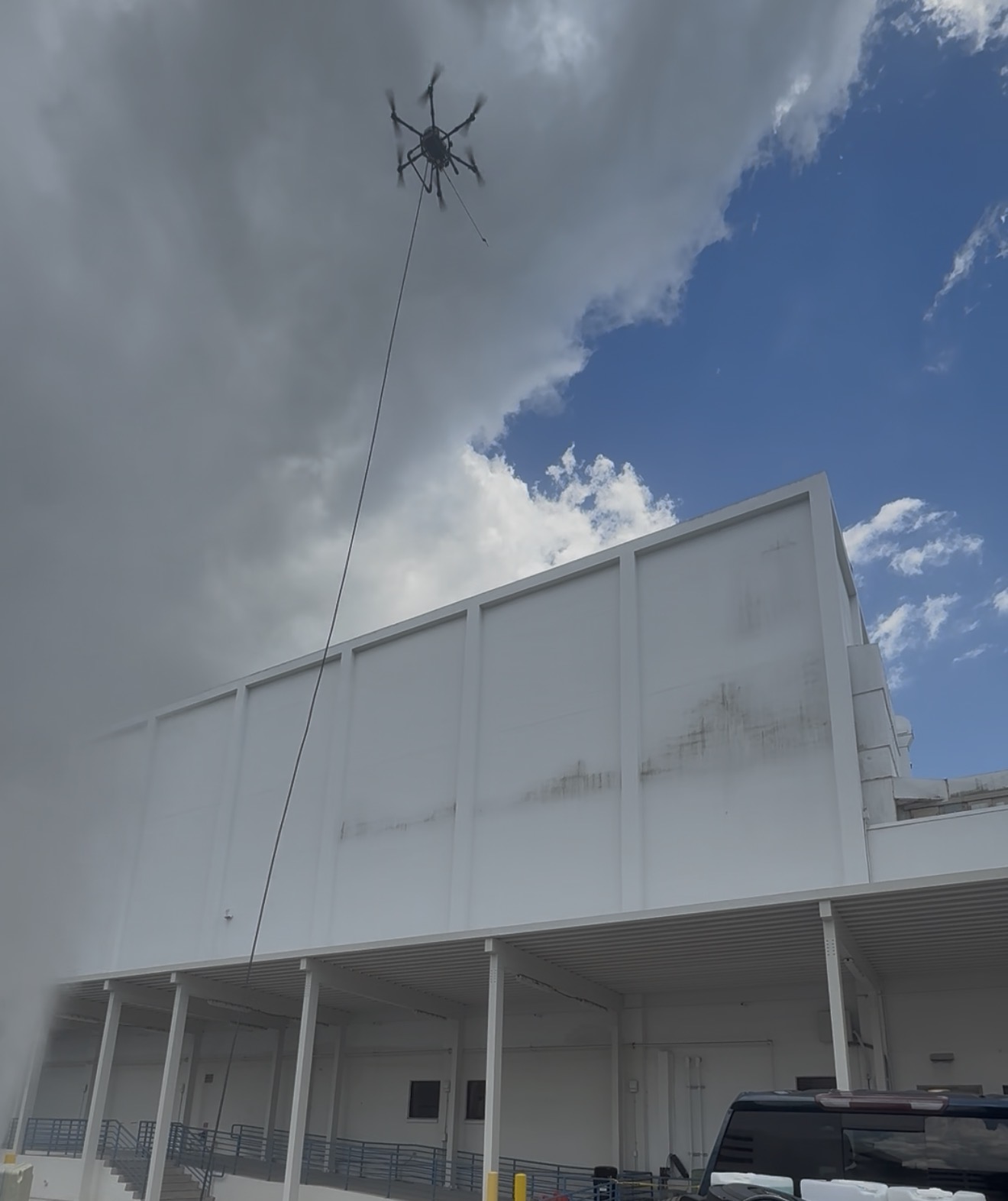
Traditional pressure washing has always had a ceiling: the technician must physically reach the surface. Above wand height, that means lifts, scaffolds, or rope — with all the cost, closures, and fall exposure those bring — or the shortcut that quietly ruins results: standing at ground level and shooting upward. An upward-angled jet hits the facade at the wrong angle, drives water up under laps, sills, and flashing, and loses pressure and pattern with every foot of height, cleaning the first two floors and streaking the rest.
The drone dissolves the ceiling. It applies solution and rinse at consistent low pressure and correct angle across the entire elevation — tenth floor identical to the first — while the crew stays on the ground. Our patent-pending steerable nozzle directs spray into eaves, soffits, balcony undersides, and recesses that a ground-based wand physically cannot address. Height stops being a compromise; it is just more surface area.
Where pressure washing still belongs
Fair is fair: pressure washing is the right tool for hard horizontal surfaces. Concrete sidewalks, driveways, parking decks, gum removal, oil-stained aprons, and unpainted masonry flatwork take PSI well and often need the mechanical action. The mistake is pointing that same tool at vertical building skin — stucco, EIFS, paint, screens, glass seals, and anything biological. The working rule is simple: if the surface is flat, hard, and mineral, pressure it; if it is coated, vertical, elevated, or alive with growth, soft wash it. StratoClean’s process is biodegradable, plant-safe soft-wash chemistry from the ground up, applied by air, which is why it is the method we bring to occupied buildings, landscaped properties, and coastal facades across South Florida.
- Pressure washing: concrete flatwork, sidewalks, parking decks, gum and oil removal, unpainted masonry
- Soft washing: stucco, EIFS, painted surfaces, residential roofs, screens and glass, any algae or mildew staining
- Drone soft washing: all of the above soft-wash scopes at any height, with no lifts, ladders, or workers elevated
Frequently Asked Questions
What is the difference between drone cleaning and pressure washing?
Pressure washing removes contamination mechanically with high-velocity water, which requires the technician to physically reach the surface and can damage stucco, EIFS, paint, and screens. Drone cleaning is low-pressure soft washing delivered by air: a biodegradable solution dwells on the surface, kills biological growth at the root, and is rinsed gently — at any height, with the crew on the ground.
Does pressure washing damage stucco and EIFS?
It can, and often does. High PSI opens hairline cracks in stucco and drives water into the substrate, and EIFS — an acrylic finish over foam — can be gouged or saturated behind the lamina. Much of the damage is invisible at first and shows up later as staining, delamination, or trapped-moisture growth. Soft washing cleans these surfaces with chemistry at rain-level pressure instead.
Why does algae come back so fast after pressure washing?
Because pressure removes the visible colony but leaves spores and root structures alive in the surface pores, with no biocide dwell to kill them. In South Florida humidity, the colony regrows from survivors within months. Soft washing treats the organism itself, so growth must re-establish from zero — which is why soft-washed surfaces stay clean several times longer.
Is soft washing safe for plants and landscaping?
StratoClean uses biodegradable soft-wash chemistry and plans every job around the landscaping and drainage on site — our team includes an FDEP-trained Qualified Stormwater Management Inspector, so rinse water and runoff are managed as part of the job plan, not an afterthought.
Can a drone pressure wash a building?
A cleaning drone is not a pressure washer — and that is the point. It applies professional soft-wash solution and rinse at low pressure, which is what vertical building surfaces need. The drone’s advantage is delivering that correct low-pressure process at heights where traditional soft washing would require lifts, scaffolds, or rope crews.
How long does a soft-washed building stay clean?
Because soft washing kills growth at the root rather than stripping the visible layer, results typically last several times longer than pressure-only cleaning — often years rather than months on facades, depending on exposure and coastal humidity. For residential roofs, our StratoShield single application extends that further, keeping the roof clean for 2 to 5 years with a 2-year written warranty.
What surfaces should never be pressure washed?
Stucco, EIFS, painted or coated surfaces, window screens, glass seals, wood siding, and residential roofs — shingle roofs in particular lose protective granules under pressure, and major shingle manufacturers specify low-pressure cleaning only. All of these are soft-wash surfaces, and all of them can be soft washed by drone at any height.
Related Services & Areas
- soft wash services
- drone roof cleaning
- drone building cleaning
- concrete and wall cleaning
- drone cleaning in Boca Raton
- instant online quote
Get a Straight Answer for Your Building
Tell us what you’re maintaining and we’ll tell you exactly how we’d clean it — method, timeline, and a firm number. Call (786) 244-0640, email info@stratoclean.com, or get an instant roof quote online.