Boom lift vs drone cleaning: compare lane closures, turf damage, the 185-foot reach ceiling, diesel exhaust, and rental-day economics before booking a lift.
What a boom lift job actually involves
On paper, a boom lift looks like the simple answer: rent the machine, raise the technician, wash the wall. In practice, a lift project is a logistics chain. The machine arrives on a delivery truck that needs somewhere to unload. The lift needs a staging lane, firm level ground for its outriggers, clearance from power lines and canopies, and a certified operator. Then it cleans the way a lift moves — one basket-width at a time, reposition, re-level, repeat. Every one of those steps costs time or space, and most of them cost both. The comparison with a drone is not about whether the lift can reach the wall; it is about everything the lift demands from your site in order to reach it.
Lane closures, parking closures, and plaza shutdowns
A boom lift has to park close to the surface it cleans, and its footprint plus outrigger spread is substantial. On most commercial properties that means taking parking out of service — often revenue parking — or closing a drive aisle, a plaza, or a travel lane for the duration. Street-adjacent work triggers maintenance-of-traffic requirements, with signage, cones, and sometimes flaggers, all of which must be arranged, permitted where required, and paid for by the day.
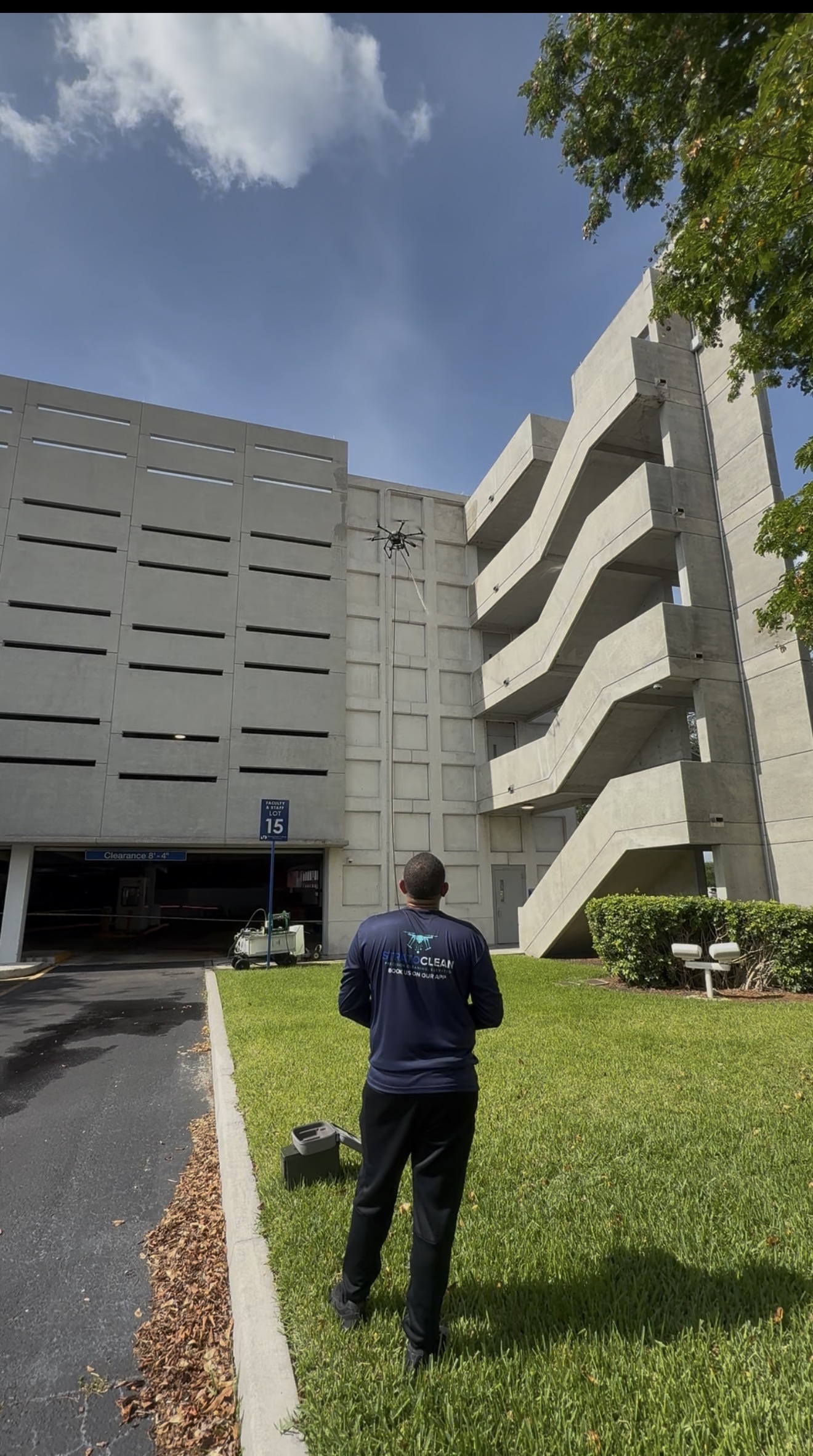
A drone rig stages in one or two parking spaces and reaches the facade from there, so most jobs need no closures at all. When a site genuinely calls for traffic control — a tight urban frontage, a school entrance — StratoClean self-performs the MOT with an FDOT Temporary Traffic Control Advanced certified team, so control is planned into the job rather than subcontracted around it. On most properties, though, the honest answer is simpler: the drone just never needs your lane.
Outriggers versus your landscaping
Boom lifts are heavy machines, and their outriggers concentrate that weight onto small pads. Landscaped properties feel it: crushed turf that takes a season to recover, cracked pavers, ruts across irrigation lines, and root-zone compaction under mature trees. Crews lay plywood or matting to spread the load, which helps, but grounds teams know what a lift week does to a lawn — and on properties where the landscaping is part of the asset, the repair bill and the months of visible damage are a real cost of the access method, not an accident.
The drone flies over all of it. Ground equipment sits on pavement, hoses run where wheels never do, and the planting beds under the facade are never load-bearing. For hotels, medical campuses, and Class-A properties where grounds presentation matters, this alone often decides the method.
The reach ceiling — and the dead zones below it
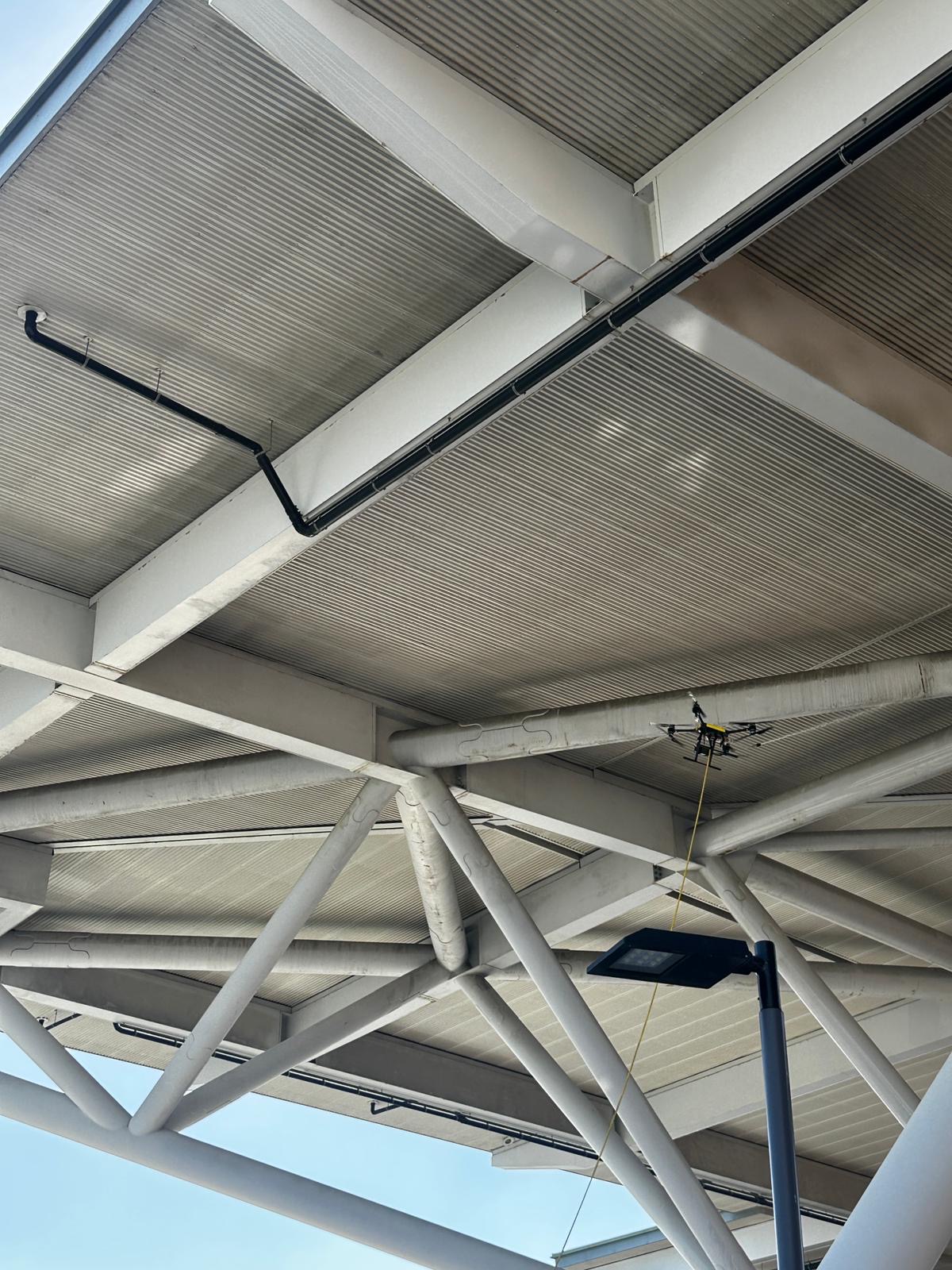
The largest boom lifts in general rental fleets top out around 185 feet, which sounds like plenty until you meet a real site. Reach is measured from where the machine can physically park, and buildings are wrapped in things lifts cannot park on: pool decks, canopies, planters, setbacks, water features, and lower roof levels. Every one of those creates a dead zone the basket cannot reach even when the wall is technically within the machine’s height rating. Upper floors above the ceiling, courtyards with no vehicle access, and facades over water are simply out of the lift’s world.
A drone’s reach is limited by flight rules and tether configuration, not by where a chassis can sit. It works over the pool deck, above the canopy, into the courtyard, and up elevations no rental lift touches. Our patent-pending steerable nozzle extends that advantage into the geometry itself — eaves, recesses, and undersides get directed spray instead of whatever angle a basket could manage.
Diesel, noise, and the tenants underneath
Most large booms are diesel machines. That means engine noise under windows all day, exhaust drifting into air intakes and balconies, and hydraulic drips on the pavement where the machine sat. Hotels notice at guest-room windows; medical facilities notice at intake louvers; offices notice on the first conference call. Electric drone equipment runs quiet by comparison, works without exhaust at the facade, and is gone the same day — a difference occupied buildings feel immediately.
Rental-day economics versus one mobilization
Lift economics are a meter that never stops: rental by the day or week, delivery and pickup fees, fuel, an operator, and the slow cycle of basket-width cleaning that stretches the rental across more days than anyone planned. Weather days still bill. Repositioning eats hours. The bigger the facade, the more the access meter — not the cleaning — dominates the invoice. Drone work compresses the same coverage into a single mobilization priced on surface area and soiling, because the machine spends its time spraying rather than driving, leveling, and repositioning. When a lift makes sense — changing light fixtures, mechanical repairs, work that needs hands and tools at height — rent one. For washing, get the exact number for your building in minutes with the instant quote at https://stratoclean.com/quote/.
Frequently Asked Questions
How high can a boom lift reach for building cleaning?
The largest boom lifts in general rental fleets top out around 185 feet, and practical reach is lower because the machine must park close to the wall on firm, level ground. Setbacks, canopies, pool decks, and landscaping create dead zones a basket cannot reach even within its height rating. Drone cleaning is not tied to where a chassis can sit, so it covers elevations and courtyards lifts cannot.
Do boom lifts damage grass and pavers?
They can. Lift outriggers concentrate several tons onto small pads, which crushes turf, cracks pavers, compacts root zones, and can rut irrigation lines even when crews lay protective matting. Drone equipment stages on pavement and flies over the landscaping, so planting beds and lawns are never load-bearing.
Does using a boom lift require closing a lane or parking?
Usually yes. The machine and its outrigger spread need staging room next to the facade, which typically takes parking spaces, drive aisles, or a travel lane out of service — and street-adjacent work triggers maintenance-of-traffic requirements. A drone rig stages in a parking space or two and needs no closure on most sites; when control is warranted, StratoClean self-performs MOT with an FDOT TTC Advanced certified team.
Is drone cleaning cheaper than renting a boom lift?
On washing scopes it usually is, because lift costs accumulate by the day — rental, delivery, fuel, operator time — while the basket cleans one width at a time. A drone covers the same facade in continuous passes in a single mobilization, so the price reflects surface area and soiling rather than access days. A free assessment or the online quote tool gives an exact figure for your building.
When is a boom lift better than a drone?
Whenever the task needs hands and tools at height: replacing light fixtures, mechanical and electrical work, sign maintenance, sealant repairs, and inspections requiring touch. Washing is coverage work a drone does faster and with less site impact, so the best programs rent lifts for repairs and fly the cleaning.
Are boom lifts disruptive for hotel guests and office tenants?
Diesel booms run loud engines under windows all day and put exhaust near intakes and balconies, and the machine occupies parking or plaza space for the duration. Drone cleaning runs on electric flight equipment, is quieter, produces no exhaust at the facade, and is typically off-site the same day.
Related Services & Areas
- drone building and facade cleaning
- stadium and venue cleaning
- hospital and healthcare exteriors
- all drone cleaning services
- drone cleaning in West Palm Beach
- instant online quote
Get a Straight Answer for Your Building
Tell us what you’re maintaining and we’ll tell you exactly how we’d clean it — method, timeline, and a firm number. Call (786) 244-0640, email info@stratoclean.com, or get an instant roof quote online.