It is one of the most-asked questions in every pilot forum, and the honest answer is that it depends on the battery, the flight and the air around it. Here is the guidance manufacturers actually give, what the numbers mean, and how to cut the wait without hurting the pack.
The short answer
Wait until the battery is close to room temperature. Not cold, and not “a bit warm.” For a small consumer drone pack in a cool room that can be 10 or 15 minutes. For a large 12S or 14S pack straight off a working aircraft in Florida heat, it is often 30 to 60 minutes in still air. If you are not sure, hold it: a pack that is ready to charge does not feel warm in your hand.
What the manufacturers say
DJI’s manuals are the most explicit. They tell you not to charge an Intelligent Flight Battery immediately after flight because it may be too hot, and to wait until it reaches room temperature. The charger will not run outside a cell temperature of 5 to 40 °C (41 to 104 °F), and DJI lists an ideal charging range of 22 to 28 °C (72 to 82 °F). LiPo makers in the RC and industrial drone space say the same thing in slightly different numbers: charge near room temperature, never hot, never cold.
Note the gap between “will charge” and “ideal.” A pack at 38 °C will take a charge on most systems. It will also age faster for it. The protection circuit is there to stop a dangerous charge, not to tell you when the battery is happy.
Why the wait matters
Charging generates heat of its own, because current flowing into a cell meets the cell’s internal resistance. Start that process on a pack that is already warm from flight and you stack the two together. The cells spend the whole charge hotter than they should be, and heat is the single biggest driver of lithium battery aging. It is also the main cause of LiPo swelling. One hot charge will not ruin a pack. A season of them will. The chemistry is covered in the benefits of cooling your drone batteries while they charge.
What shortens the wait, and what does not
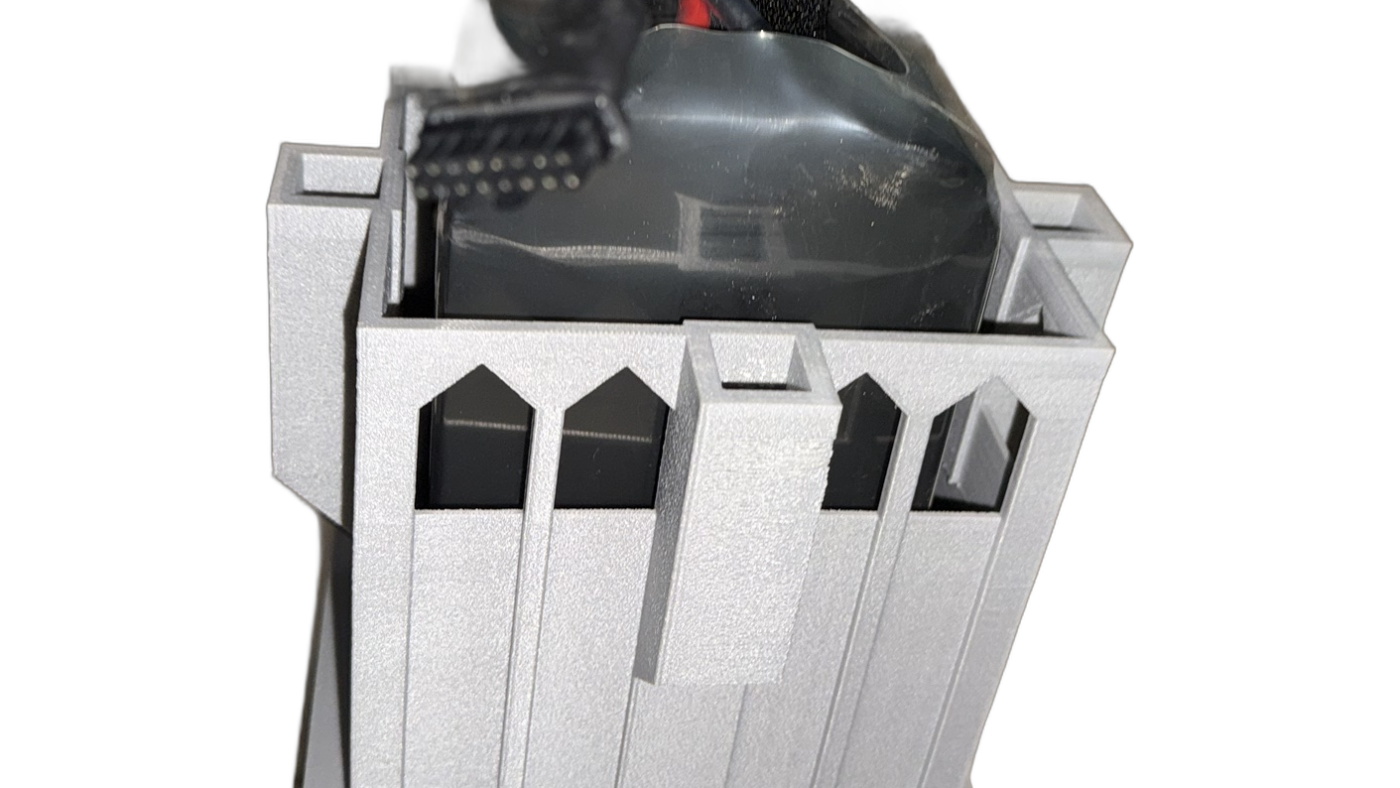
- Airflow shortens it. Moving air across the pack removes heat several times faster than still air. A fan is the right tool. A battery cooling station is a fan built around the battery, with air moving across every face, and it lets you keep cooling while the pack charges.
- Shade shortens it. A battery sitting in the sun on a tailgate is gaining heat, not losing it. Get it under cover.
- Spreading packs out shortens it. Batteries stacked together keep each other warm.
- Ice packs and coolers do not help. They bring the pack below ambient and cause condensation when it comes out. Same for a refrigerator or freezer. The target is room temperature, not cold.
- Removing the pack from the aircraft helps. A battery still in the drone sits against warm motors and electronics.
A field routine that works
- Land, pull the battery, and put it in the shade immediately with air moving across it.
- Give a large pack at least a few minutes of airflow before it takes current, longer if it was hot to the touch.
- Charge with the airflow still running, so the pack stays near room temperature for the whole charge.
- If the charger refuses the battery, do not keep retrying. Let it cool further.
This is the routine we run on our own cleaning drones at StratoClean, and it is why we built our own Battery Cool-Down Station: a USB-powered fan housing that brings a hot pack down fast and keeps it cool while it charges. What to look for in one is in why you should be using a cooling station for your drone batteries.
Frequently asked questions
How long should I wait to charge my drone battery after a flight?
Until it is at or near room temperature. In still air that is usually 30 minutes or more for a large pack. With forced-air cooling it is a fraction of that. If the battery still feels warm in your hand, it is not ready.
What happens if I charge a hot drone battery?
The cells age faster, capacity drops sooner, and a LiPo is far more likely to swell. Most smart batteries and chargers will refuse to start until the pack cools, but that protection is a backstop, not a plan.
Can I put a hot drone battery in the fridge or a cooler to speed it up?
No. Taking a battery below the temperature of the surrounding air causes condensation on and inside the pack when it comes back out. Cool it with airflow at room temperature instead.
Is it bad to charge a cold battery?
Yes. Most lithium flight batteries should not be charged below about 5 °C, and some manufacturers set the limit higher. The target is the same in both directions: close to room temperature.