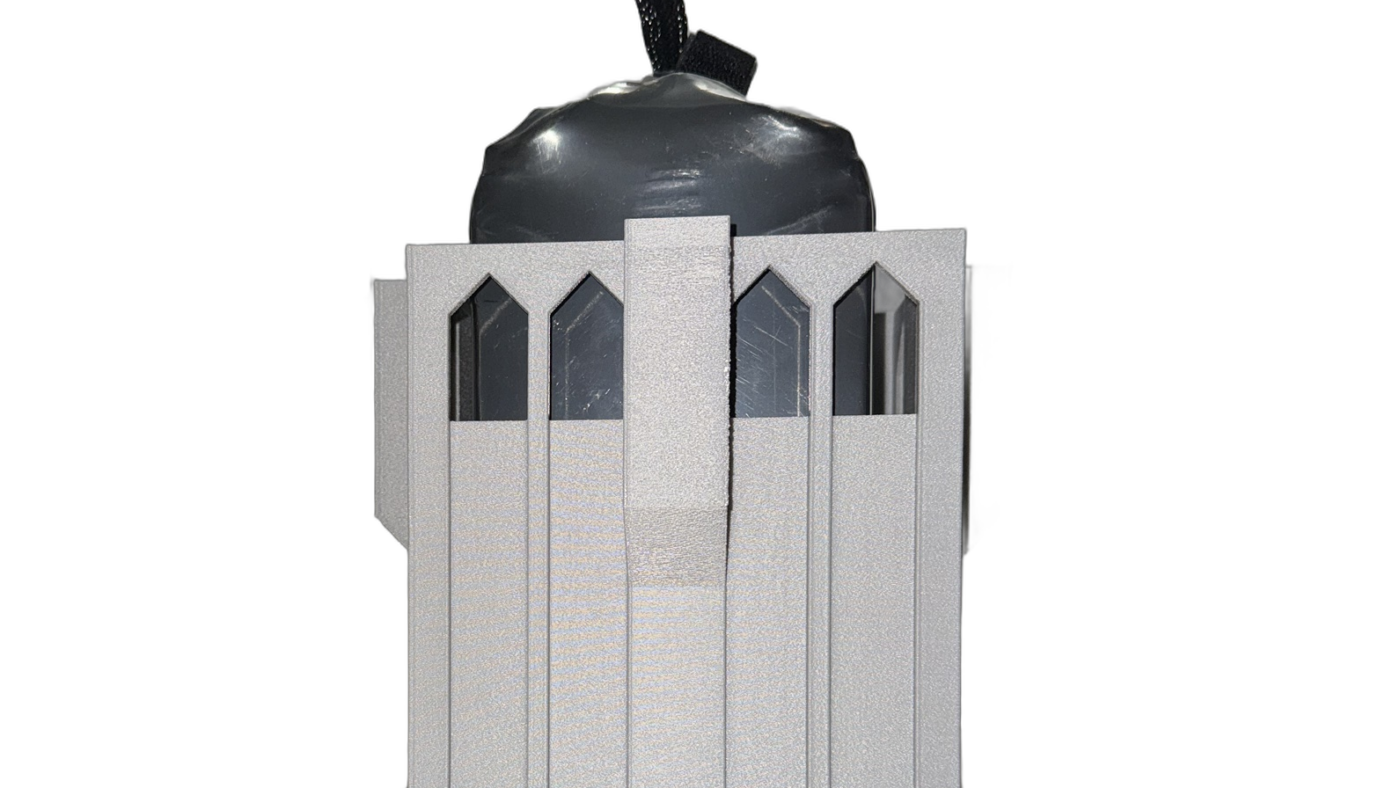
If you fly a drone for work, your batteries are the most expensive consumable you own, and heat is what uses them up. A battery cooling station is a small, simple piece of equipment that attacks that one variable. Here is why operators are adding one to the charging bench and the truck, and what to look for if you do.
The problem a cooling station solves
Large flight packs hold a lot of heat. A 22,000 mAh 14S battery is a 7 kg block of lithium cells, and once it is warm from a flight it stays warm for a long time. Left on a bench it can take 30 to 60 minutes to reach room temperature, and for most of that time the charger either will not start or, worse, will charge it hot.
Every pilot has a workaround. Some rotate more batteries than they need so there is always a cool one. Some spread packs out in the shade and hope. Some charge hot and accept the cycle loss. A cooling station replaces all of that with a fan.
What a cooling station does
At its simplest, a cooling station is a vented housing with a fan that moves air across the battery. The pack sits inside with its charge lead and balance lead free, so you charge it in the station with whatever charger you already use. Forced air pulls heat out of the pack far faster than still air, and it keeps carrying heat away for the whole charge, so the cells never climb the way they do on a bench.
The payoff is in three places. The battery reaches charging temperature sooner, so turnaround between flights is shorter. The battery charges cool, so it ages slower and is far less likely to swell. And the pack is never sitting hot on a charger, which is where most lithium battery incidents begin. We covered the chemistry in the benefits of cooling your drone batteries while they charge.
Why a fan and not a cooler
Ice packs and refrigerators get suggested in every pilot forum, and they cause a different problem. Anything that takes the battery below the temperature of the surrounding air brings condensation when the pack comes back out, on the terminals, on the balance leads, and inside the wrap. The right target is room temperature, reached quickly and held, and airflow does that without ever overshooting. It also needs no ice, no sealed box and no attention.
What to look for in a cooling station
- Air across every face. A fan blowing at one side of a battery cools one side. Look for a design that pulls air up through the base and out around the pack, with vented walls so nothing traps heat.
- Clearance around the battery. If the pack fills the cavity edge to edge, air cannot move. About an inch of space on every side is the minimum that works.
- Leads free while it cools. You should be able to charge in the station. If you have to take the battery out to plug it in, the station only solves half the problem.
- Power you have in the field. A station that needs a wall outlet is a bench tool. One that runs off a USB battery pack goes in the truck.
- Speed control. Full airflow for a pack straight off the aircraft, quieter trickle cooling on the bench.
- A cover. Batteries on a job site collect dust, sun and drips. A canopy that keeps the pack covered while warm air still escapes out the top is worth having.
- The right size for your packs. Tattu, Gens Ace, DJI Agras and the packs on Lucid and Apellix cleaning drones are all different shapes. Measure your battery before you buy.
How we came to build one
StratoClean is a drone cleaning company in Miami. Our aircraft carry a spray system and pull hard on 12S packs all day in Florida heat, and we were losing batteries to it. We built the Battery Cool-Down Station to fix our own problem: a fan in the base pulling air up through the pack, vented walls, at least an inch of airflow on every side, a lift-off canopy, and a USB cord with an inline speed controller so it runs off the same power bank we carry for a phone. It comes in three sizes, from the Tattu 10,000 mAh packs on a Lucid Sherpa up to the DB1560 on a DJI Agras T40 or T50, and the product page has a size finder that takes your battery’s dimensions and picks the station for you.
Where it pays off first
Any operator who charges on site will feel the difference on day one, because site charging is where the waiting happens. Agricultural spray crews, roof and building cleaning crews, solar farm crews and inspection teams running back-to-back flights all turn batteries faster with a station on the tailgate. On the bench at home, the gain is quieter but it compounds: every pack charged cool is a pack that lasts longer.
If you are still deciding how long to let a pack rest before it goes on the charger, read how long to wait before charging a drone battery after flying.
Frequently asked questions
What is a drone battery cooling station?
A vented housing with a fan that moves air across a flight battery while it rests or charges. The battery sits inside with its leads free, so it works with any charger. It brings a hot pack to room temperature quickly and keeps it there through the charge.
Do I need a cooling station for a small consumer drone?
A small pack cools fast on its own, so the benefit is smaller. Cooling stations matter most for the large 6S, 12S and 14S packs on commercial, agricultural and cleaning drones, where a pack can hold a lot of heat and a charge takes a long time.
Can one station cool batteries from different drones?
Yes, as long as each battery fits the cavity with room for air to move around it. The StratoClean station comes in three sizes that cover packs from a Tattu 10,000 mAh 12S up to a DJI Agras DB1560-class battery.
Does a cooling station need a wall outlet?
Not the StratoClean one. It is powered by USB and purpose-built to run off a standard USB battery pack, so it works at a job site with no outlet in sight. Add a USB wall adapter at home or in the shop.