Every drone pilot has stood next to a warm battery, charger in hand, and made the same choice: wait, or charge it now. Waiting costs flight time. Charging hot costs cycles. Cooling the battery while it charges removes that trade-off, and it is the single easiest change an operator can make to get more life out of expensive flight packs. Here is what it does, why it works, and how we use it on our own aircraft.
Heat is what ages a lithium battery
A lithium battery does not wear out from use alone. It wears out from the conditions it is used in, and temperature is the biggest one. Inside every cell there is a thin layer on the anode that grows a little with every cycle. The hotter the cell, the faster that layer grows, and the more lithium it locks away. Capacity falls, internal resistance rises, and the pack that used to give you a full flight starts giving you a short one.
The effect is not linear. A pack that spends its charging hours at 45 °C does not age a little faster than one at 25 °C. It ages a lot faster. That is why battery manufacturers publish a charging temperature window and why the better chargers refuse to start until the pack is inside it.
Charging adds heat on top of flight heat
A drone battery comes off the aircraft warm. On a cleaning drone pulling heavy current at full payload, a 12S or 14S pack can land uncomfortable to hold. Charging then adds its own heat: current flowing into a cell generates heat through the cell’s internal resistance, and fast chargers push a lot of current. Put a warm pack straight on a fast charger and you stack flight heat and charge heat together, which is the worst thing you can do to it short of puncturing it.
Most pilots know this and do one of two things. They wait, typically 30 minutes or more in open air, which is a lot of dead time when you fly for a living. Or they charge anyway and let the battery’s thermal lockout decide, which means the pack sits hot on the charger until it drifts down on its own. Neither is good. The battery spends the longest possible time at the highest possible temperature.
What active cooling changes
Forced air changes the whole curve. Air moving across every face of a battery pulls heat out far faster than still air, so a pack that would take half an hour to come down on a bench comes down in a fraction of that. Once it is on the charger, the same airflow carries away the heat the charge itself generates, so the cells charge at or near room temperature instead of climbing through the whole cycle.
The benefits stack up:
- More cycles from every pack. Cells charged cool age slower. Over a season of daily flying, that is the difference between a battery you retire at a set number of cycles and one that still holds capacity.
- Less swelling. Charging a warm LiPo is the fastest way to puff it. Keeping the pack cool during the charge removes the main cause.
- Faster turnaround. A cooled pack reaches charging temperature sooner, so it goes on the charger sooner and back on the aircraft sooner. For a working crew that is more flights per day with the same batteries.
- Fewer charger lockouts. Smart chargers and smart batteries refuse a hot pack. With airflow, the pack is already inside the window when you plug it in.
- Safer charging. Heat is the precursor to every lithium battery failure. A pack that never gets hot during charging is a pack that is a long way from thermal runaway.
What we measured on our own drones
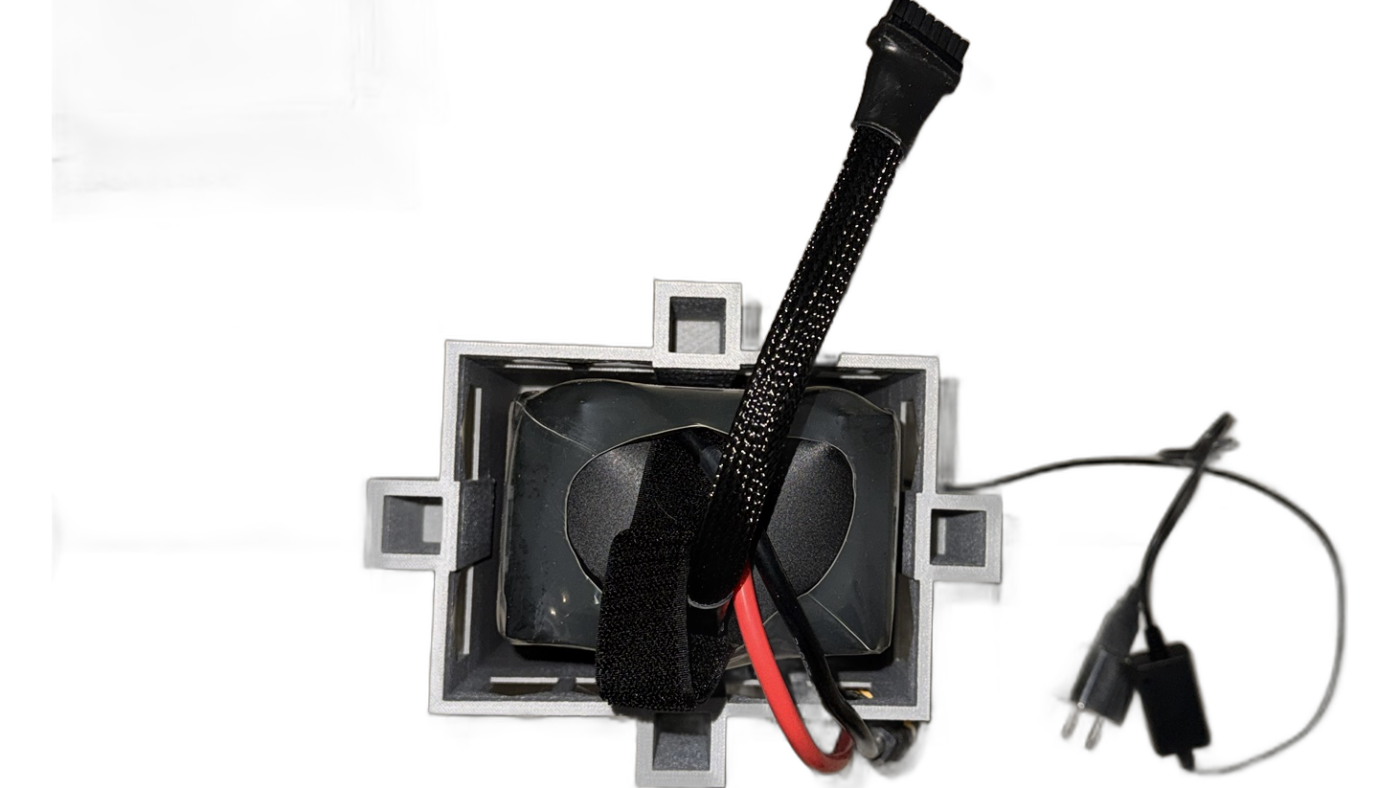
StratoClean flies heavy-lift cleaning drones every working day across South Florida and on solar farms, which means a lot of 12S packs cycling in a lot of heat. We built the Battery Cool-Down Station for ourselves first. A fan in the base pulls air up through the pack from underneath while it rests or charges. In our own use, the station cuts the heat the battery holds during charging by up to 90 percent compared with the same pack charging on the bench, and the packs go back on the aircraft noticeably sooner.
Why not a cooler with ice packs?
It is a common field trick and it is a bad one. Cold packs and a sealed cooler bring the battery below the temperature of the surrounding air, and when it comes back out, moisture condenses on and inside it. Condensation on balance leads and inside a pack is a short circuit waiting to happen. The same goes for a refrigerator or a freezer. The goal is not to make the battery cold. The goal is to bring it to room temperature quickly and hold it there, and airflow does exactly that without ever going below ambient.
How to cool while charging
- Pull the battery as soon as you land and set it in the station with the fan running. Keep the leads accessible.
- Give it a few minutes. A hot pack straight off the aircraft should come down before it takes current.
- Plug the charger in as usual. Leave the fan running for the whole charge.
- If your charger shows cell temperature, watch it on the first few charges. You will see the difference.
That is the whole routine. No app, no settings, and nothing to remember except plugging in a USB cord. For what a station is, what it fits and how it is built, read why you should be using a cooling station for your drone batteries. For the wait-time question on its own, see how long to wait before charging a drone battery after flying.
Frequently asked questions
Does cooling a battery while it charges make it charge faster?
Not directly. The charger sets the rate. What cooling does is keep the pack inside the temperature window where the charger will run at all, so a hot battery does not sit idle waiting to cool, and the cells are not charged while they are stressed by heat.
Is it safe to run a fan on a LiPo battery during charging?
Yes. Moving room-temperature air across the pack is the gentlest way to remove heat. It is the sudden swings from a refrigerator or an ice-filled cooler that cause condensation and damage, not airflow.
What temperature should a drone battery be when I charge it?
Most lithium flight batteries charge best close to room temperature. DJI, for example, lists an ideal charging range of about 22 to 28 °C (72 to 82 °F) and stops charging outside 5 to 40 °C. Check your own battery’s manual for its limits.
Will a battery cooling station work with my charger?
A cooling station is independent of the charger. The battery sits in the station with its charge lead and balance lead free, so you plug in whatever charger you already use. See the StratoClean Battery Cool-Down Station for how that works.