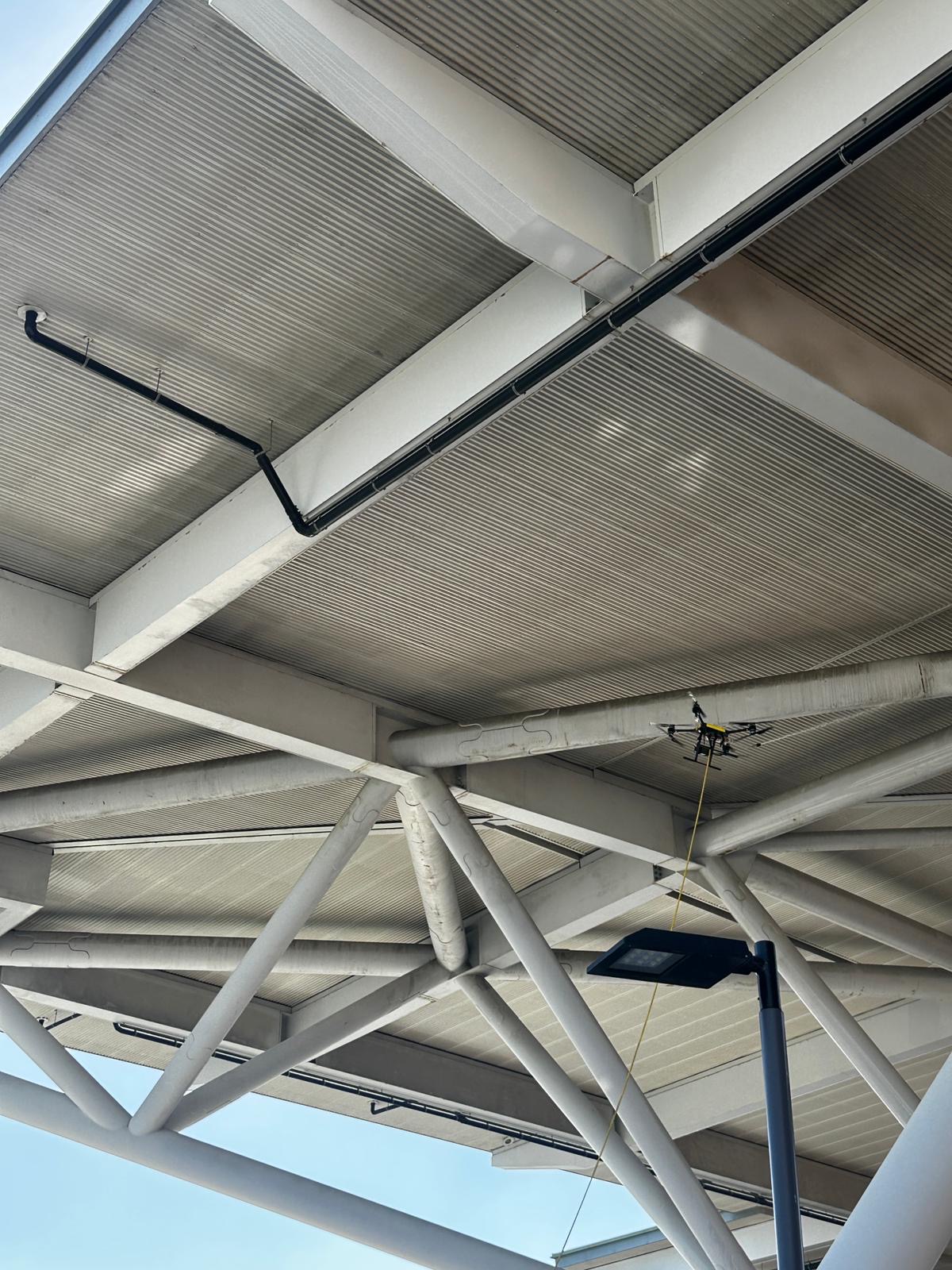
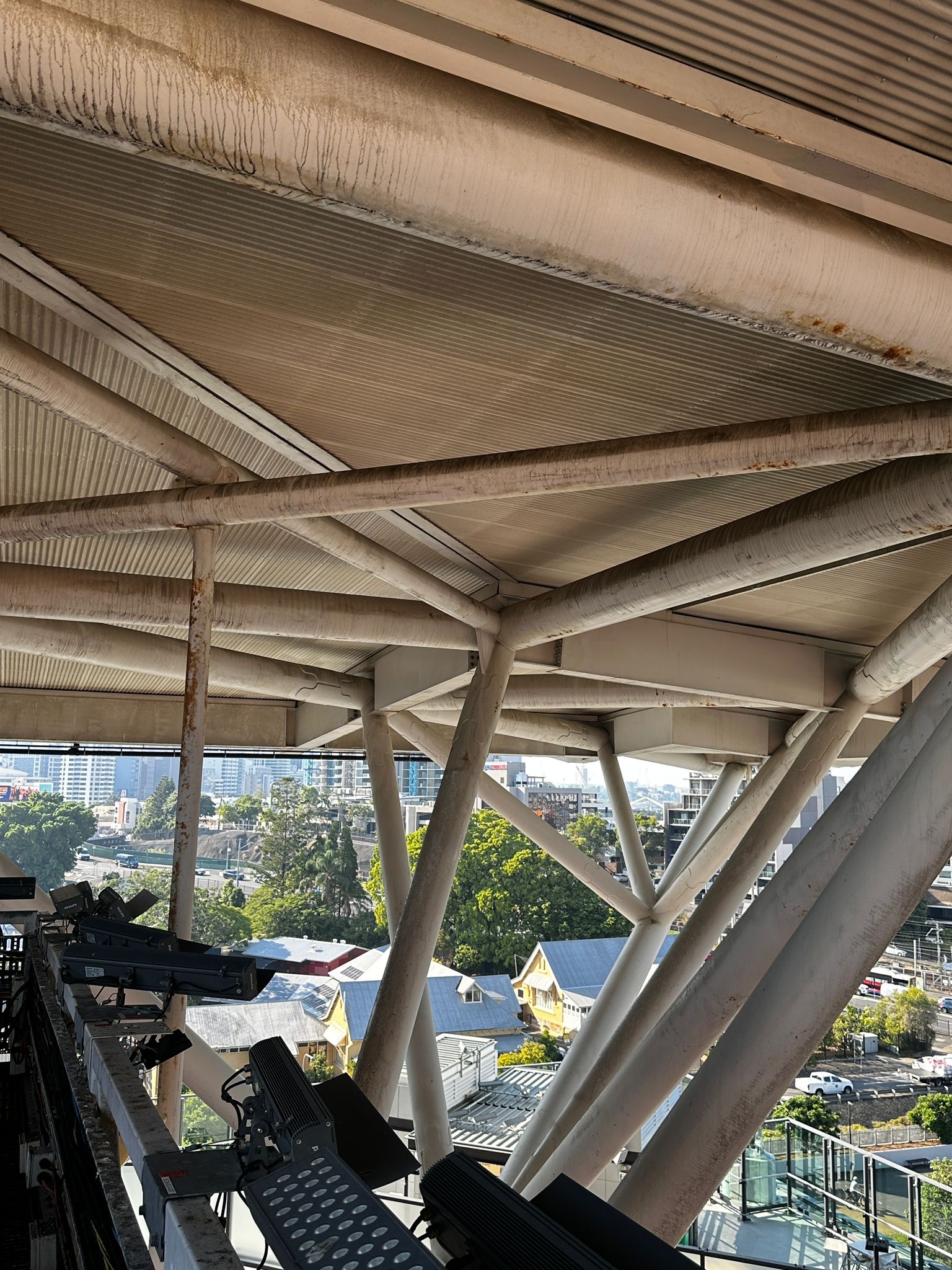
Spring training home of the Houston Astros and Washington Nationals — and a piece of public art that needed a chemistry built specifically for it.
The property
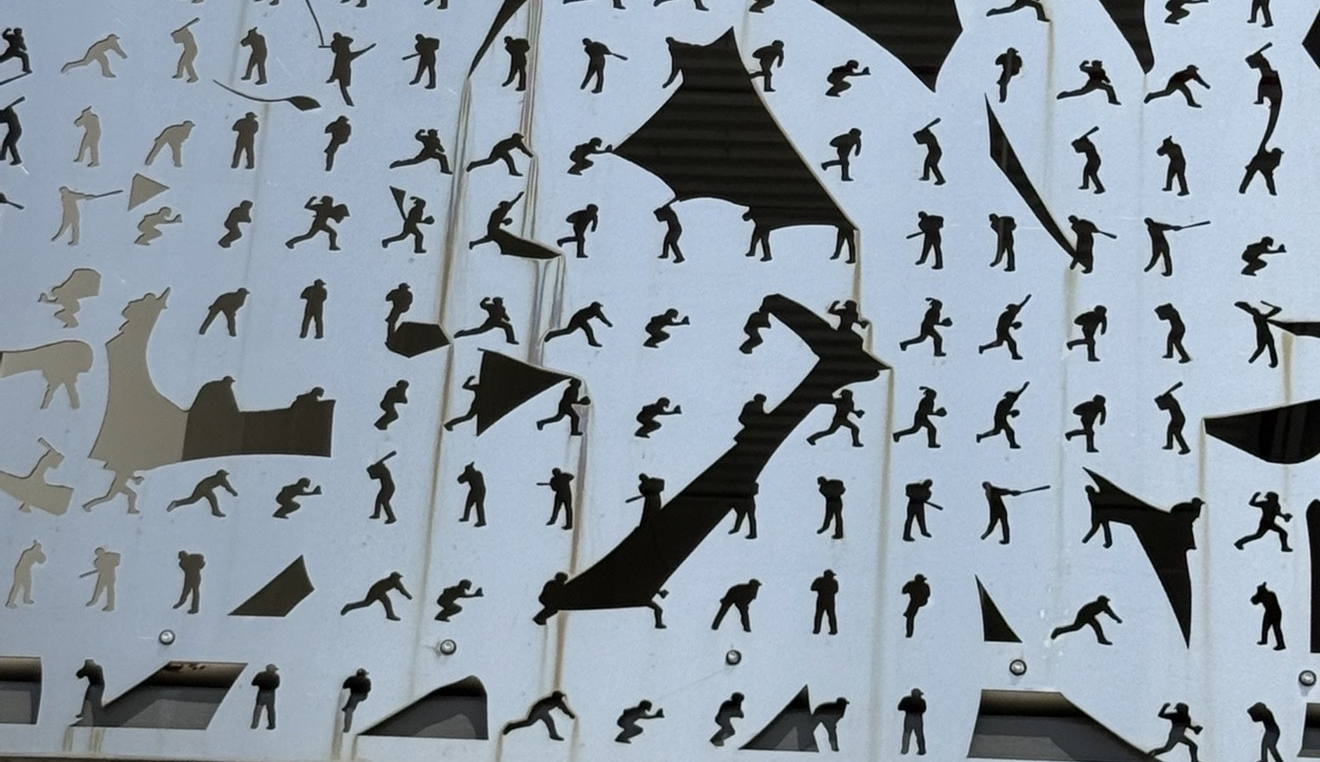
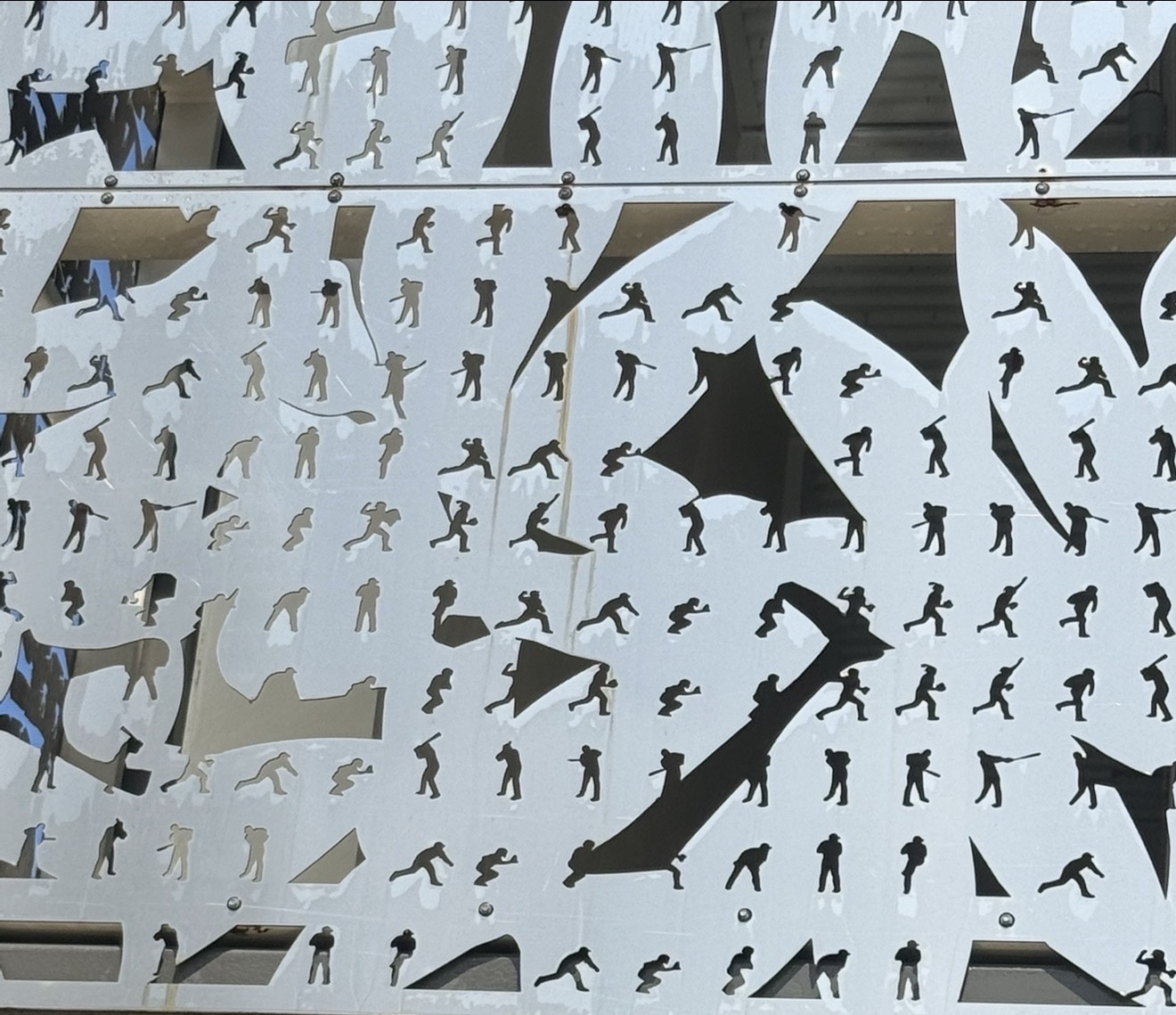
CACTI Park of the Palm Beaches is the shared spring training facility of the Houston Astros and Washington Nationals, located in West Palm Beach, Florida. The facility’s signature visual element is an extensive perforated stainless-steel facade installation by Gizmo Art Production of San Francisco — laser-cut player silhouettes across thousands of square feet of 316L stainless steel panels, mounted on the concourse, restroom canopy, tower, entry, and bridge railings of the ballpark.
The problem
After years of South Florida coastal exposure, the stainless panels had developed visible salt-driven rust and oxidation across the brushed satin finish. The manufacturer’s care manual specified soap and warm water for routine maintenance and naval jelly for spot rust treatment, but neither method scaled to the actual surface area or addressed the depth of oxidation that had accumulated.
The conventional options carried significant cost and risk:
- Remove and ship to the original fabricator in San Francisco for factory re-buffing — estimated total cost $50,000 to $100,000+ including transport, professional polishing, and venue downtime measured in weeks.
- Traditional in-place cleaning crew with boom lifts and scaffolding — estimated $35,000 to $50,000 with at-height insurance overhead and 4 to 5 days on-site.
- In-house staff — risk of damaging irreplaceable artwork panels through trial-and-error chemistry, with no documentation and no liability transfer.
What StratoClean did
StratoClean engineered a custom drone-applied chemistry profile specifically calibrated for 316L stainless steel with brushed satin finish. The chemistry sits in the same gentle-acid family as the manufacturer’s own naval-jelly recommendation, but is formulated for full-panel application rather than spot treatment.
An on-site demonstration was performed on the right side of one panel section using a single application pass at minimum dwell time, with the left side intentionally left untouched as a side-by-side reference. The result lifted the salt-driven rust and oxidation off the treated surface touchlessly — without contact, without abrasion, and without damaging the brushed satin finish.
Why the touchless approach matters here
The Gizmo Art panels are functionally irreplaceable on a short timeline. A single damaged panel requires re-fabrication by the original artist studio in San Francisco — a process measured in months, not days. Any maintenance approach that involves contact with the brushed finish (mechanical buffing, pressure washing, rope-access crews with hand tools) carries the risk of changing the finish appearance permanently and creating a visible patch that does not match the surrounding artwork.
Drone-applied chemistry sidesteps every contact risk. The drone hovers, applies, and rinses — the finish is never touched. The same approach scales across the eight panel sets at the venue, including the panels requiring double-sided cleaning.
What this enables for other facilities
The chemistry profile and methodology developed for CACTI Park applies directly to any installation of architectural stainless steel facing coastal exposure — corporate headquarters with stainless cladding, civic buildings, museums, hospitals, and other venues where the artwork or finish quality is part of the property’s identity. The work happens from the air, on a one-day production schedule, with full per-section before/after documentation.
Get a property assessment
If your facility has stainless steel facade elements, architectural metal panels, or any specialty substrate that has resisted standard cleaning approaches, schedule a free 30-minute walk-through. Call (786) 244-0640 or email info@stratoclean.com.
Additional CACTI Park field shots